

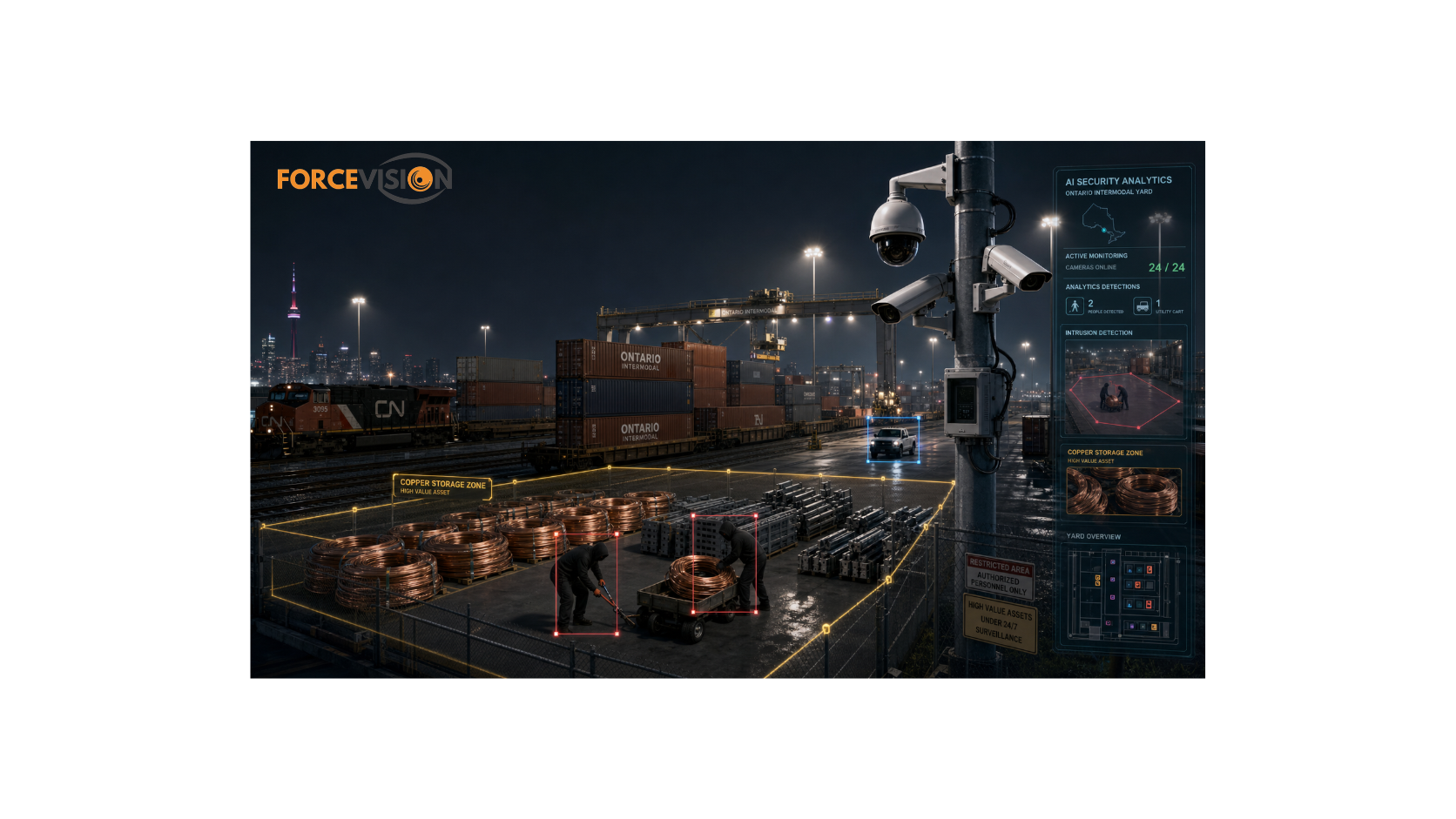
Copper Theft Is Surging Again
Copper theft has resurfaced as a growing issue across Canada, with police in Waterloo Region flagging repeated thefts as a significant concern in 2026. These incidents typically target copper wire, cabling, and other metals from construction projects, utilities, rail infrastructure, and industrial yards, causing not just direct material losses but also expensive downtime and repairs. The problem has grown serious enough that a local MP introduced a private member’s bill aimed at cracking down on scrap dealers who knowingly trade in stolen copper, proposing fines and potential jail time.
For logistics hubs, rail yards, and large manufacturing sites that store spools of copper or operate power-heavy equipment, this trend should prompt a re-evaluation of physical security. Industrial CCTV for Ontario logistics yards copper theft is becoming a critical layer in protecting both assets and uptime.
Why Copper Theft Hits Logistics and Rail Yards Hard
Copper is both valuable and essential to operations. Thieves might target: ground cables along rail lines, copper wiring from yard lighting, cabling from powered gantries, or spools stored in open or lightly protected areas. The direct cost of the stolen metal is only one part of the equation; the bigger impact is often the outage that follows—dark yards, disabled signals, or inoperable equipment that slows or stops cargo movements.
In logistics yards and rail-served terminals across Southern Ontario, downtime compounds quickly. Delayed trains, rescheduled trucks, and idle crews can turn a single theft into a multi-day operational headache, not to mention safety risks when lighting or signalling is compromised. For operators in Kitchener-Waterloo, Hamilton, and the GTA, investing in industrial CCTV for Ontario logistics yards copper theft is as much about keeping freight moving as it is about stopping thieves.
How Can CCTV Deter and Detect Copper Thieves?
Thieves typically look for easy targets: poorly lit corners, unmonitored storage areas, and perimeters that can be approached and exited quickly. Highly visible cameras, signage, and lighting around copper storage, substations, and rail-side infrastructure send an immediate message that the site is watched and recorded. Bullet cameras with IR capability can capture activity even in low light, while PTZ cameras give operators the ability to track a suspect across multiple zones.
Detection is where analytics matter. Virtual tripwires along fence lines, people detection after hours in normally empty zones, and object removal alerts around storage racks can generate alarms when someone crosses into restricted areas. For long rail corridors or large yards, this helps security teams focus on the critical five or six events per night instead of endlessly watching screens.
Where Should Cameras Be Focused for Copper Risk?
Designing industrial CCTV for Ontario logistics yards copper theft starts with mapping where copper actually lives and where thieves are likely to approach from. Key zones include:
-
Storage areas for cable reels, transformers, or electrical components.
-
Perimeter sections adjacent to roads, rail lines, or wooded areas that provide cover.
-
Yard lighting poles and power infrastructure, which may be targeted for grounding cables.
-
Maintenance shops and scrap storage, where offcuts or recovered cable might be stored.
Cameras should provide overlapping coverage so that no single failure creates a blind spot. Mounting PTZ cameras near high-value clusters allows operators to zoom in when an alert fires, while fixed domes maintain constant, documented views for evidence. Where yards share boundaries with other industrial tenants, cooperative coverage and shared risk awareness can be particularly effective.
How Do 64-Camera Systems Scale for Complex Yards?
Copper theft risk rarely sits in one place. Large logistics hubs and rail yards may have multiple access gates, long fence lines, and dispersed high-value zones. A 64-camera NVR platform gives enough flexibility to cover entrances, perimeters, operational lanes, and storage without running out of channels during the design phase. It also supports higher resolution streams where detail matters most, such as near copper storage and vehicle access points.
As risk evolves—perhaps copper storage moves, or thieves shift to new access routes—the system can adapt. Additional cameras can be added in phases, and analytics rules can be adjusted based on real incident patterns. For multi-site operators, federated platforms allow you to see trends in copper theft attempts across different yards, informing where to invest next.
How Can CCTV Evidence Support Law Enforcement and Policy?
In Waterloo Region, rising copper theft has pushed elected officials to focus on the resale side, with proposed penalties for scrap dealers who knowingly handle stolen metal. But for prosecutions to stick, police still need clear evidence tying suspects to specific thefts, times, and locations. Good video—time-stamped, high resolution, and from multiple angles—greatly strengthens these cases.
Industrial CCTV for Ontario logistics yards copper theft can also help operators demonstrate to insurers and regulators that they are acting responsibly. Documented evidence of attempted thefts, captured licence plates, and clear footage of the methods used allows both internal teams and external partners to refine strategies. This is especially important where copper theft intersects with critical infrastructure, such as power feeds to rail signalling or refrigeration units for perishable cargo.
A Practical Role for ForceVision
If you manage a yard or terminal where copper is stored, used, or runs along your perimeter, now is an ideal moment to revisit your surveillance strategy in light of the uptick in thefts. ForceVision helps industrial operators across Southern Ontario design and deploy 64-camera and larger CCTV systems tailored to complex logistics environments, with particular attention to high-value metal and infrastructure protection.
If you’re not sure whether your current system would actually capture a copper theft attempt from approach to escape, a no-pressure assessment can highlight gaps and practical upgrades. Sometimes, a handful of targeted cameras and adjusted analytics rules can dramatically improve your coverage without a full rebuild.
Key Takeaway for Logistics and Rail Leaders
Copper theft is more than a nuisance; it is a growing operational threat that can knock out lighting, signalling, and critical infrastructure, especially in rail-connected logistics yards. Use the renewed focus on this issue as a trigger to map your copper exposure and make sure your CCTV platform is truly aligned to that risk.
FAQ
Q1: Are copper thieves usually insiders or outsiders?
Both are possible. Outsiders may target perimeter cabling or storage, while insiders might exploit familiarity with yard layouts and routines to access high-value copper with less suspicion. CCTV helps document behaviour in both scenarios.
Q2: What’s the most important camera feature for copper theft risk?
Good low-light performance and clear detail for identifying people and vehicles are crucial. Analytics capabilities (like virtual tripwires) and reliable storage also make a big difference in turning video into useful evidence.
Q3: Does CCTV actually deter copper theft, or just record it?
Visible cameras and signage do deter some opportunistic thieves, especially when combined with good lighting and access control. For more determined offenders, the goal is rapid detection and strong evidence for police and insurers.
Q4: How often should we review footage if no alerts trigger?
Security teams should spot-check high-risk zones regularly and review analytics performance, tweaking rules to reduce false alarms and catch real events more effectively over time.


