

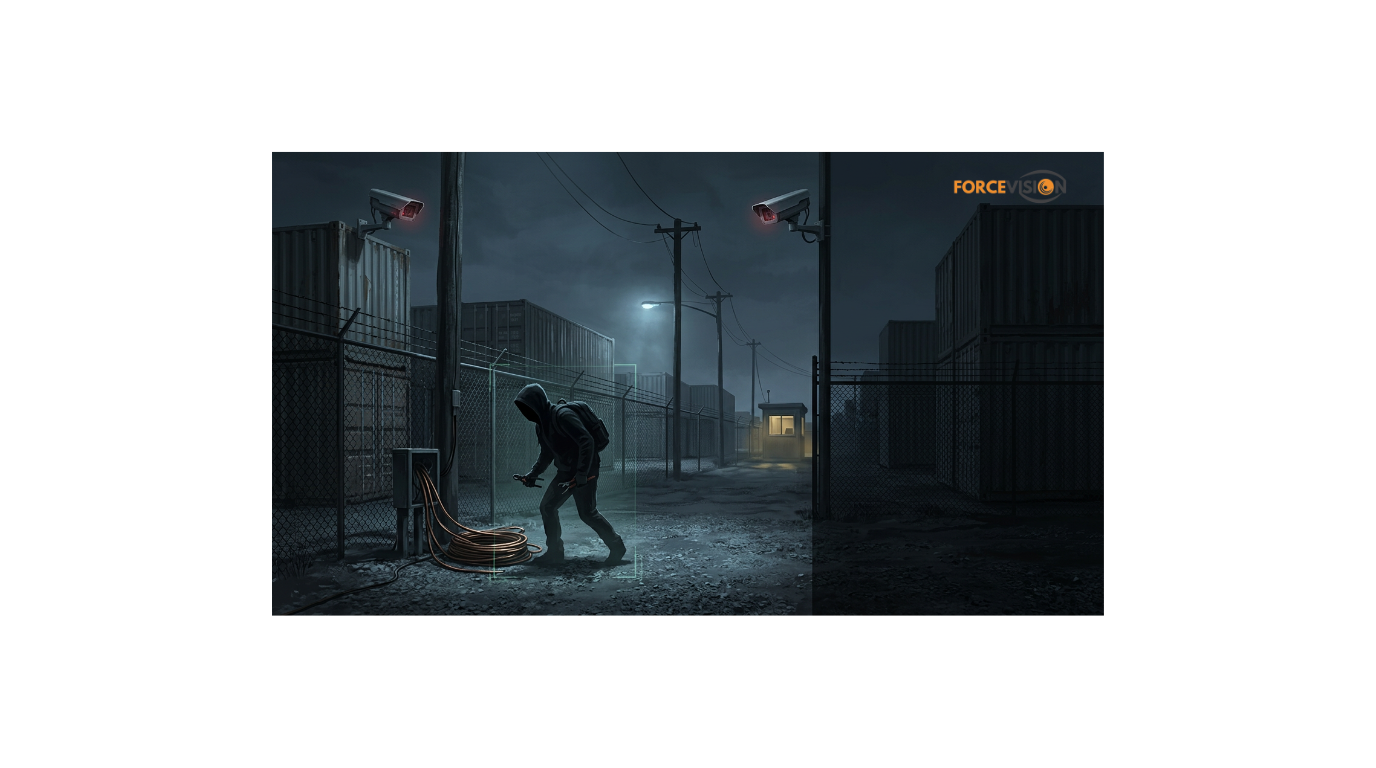
When copper thieves can strip a site in minutes, the difference between a dark yard and a well‑designed industrial CCTV system often shows up as a six‑figure loss on your balance sheet. Recent reports from Waterloo Region highlight a growing wave of copper wire thefts that are now front‑of‑mind for police and local leaders. For large industrial operators across Southern Ontario, this is not an abstract problem — it is a direct threat to production, uptime, and worker safety.
Copper, stainless steel, and other resellable metals are easy to move and hard to trace, which makes them a favourite target for organized crews and opportunistic thieves alike. Rail yards, energy facilities, manufacturing plants, and big distribution hubs all have what these crews want: exposed cable runs, outdoor storage, and sprawling perimeters that are difficult to supervise after hours.
Why copper theft is a growing industrial risk in Ontario
There are three converging trends driving risk for large sites: commodity pricing, well‑organized scrap channels, and visibility gaps on big properties. When metal prices rise, theft attempts follow, and thieves do not care whether they are cutting cable from a rail spur, a warehouse roof, or a substation yard.
For industrial operators, the direct loss of cable or metal is only the first hit. The bigger costs are:
-
Emergency repairs when critical feeds are cut.
-
Line downtime while electrical or communication systems are made safe.
-
Delayed shipments and missed SLAs when operations stop.
-
Risk to workers if live conductors or unsafe conditions are left behind.
Police and local MPs in communities like Cambridge are now treating copper theft as a significant public safety and infrastructure issue. That is a strong signal to industrial operators that existing deterrents such as fencing and “No Trespassing” signs are no longer enough.
Where are the gaps on rail yards, plants, and distribution centres?
Walk your site the way a thief does, not the way your team does at 10 a.m. on a Tuesday. You will see a few common patterns where copper and metal thefts start:
-
Out‑of‑the‑way cable runs behind warehouses, along rail lines, or near retention ponds.
-
Unlit or poorly lit “back forty” zones where scrap, spools, or surplus inventory are stored.
-
Utility corridors and substations serving your plant or yard but owned by you or a private utility partner.
-
Perimeter blind spots where cameras, if present at all, only cover the gate but not the fence lines.
Traditional small‑site setups — four to sixteen cameras focused on doors, docks, and parking — simply cannot give you reliable coverage across hundreds of metres of fence and outdoor storage. Once thieves learn where cameras do not reach, they work the same gaps repeatedly.
How industrial CCTV changes the copper theft equation
An industrial‑grade CCTV design for copper and metal theft does more than record evidence for later. It reshapes the risk calculus for thieves and gives your team a way to see, verify, and act in real time.
Key elements include:
-
High‑resolution fixed cameras on key runs and storage areas, giving clear views of cable racks, reels, transformer pads, and rooftop access points.
-
PTZ (pan‑tilt‑zoom) cameras at strategic corners that can sweep long fence lines, rail spurs, and yard access routes.
-
Thermal or low‑light cameras in areas where lighting is limited or where you cannot add illumination due to neighbours or regulatory constraints.
-
Integrated lighting and audio deterrents that trigger spotlights and pre‑recorded voice warnings when people enter restricted zones after hours.
When these cameras feed into a properly configured NVR security platform, your control room, remote monitoring partner, or on‑call supervisor can see intrusion alarms and live video side by side. This is critical for verifying whether motion after hours is a raccoon or a person with bolt cutters.
Why 64‑camera and larger systems fit big copper‑exposed sites
Copper theft is rarely confined to one corner of a property. Once crews have success at one site, they test other approaches, cable runs, and structures. For rail yards, logistics hubs, and energy facilities, this means you need wide‑area coverage — often in the 64‑camera and above range — to close the gaps.
A 64‑camera industrial system lets you:
-
Cover multiple “rings”: perimeter, yard, building exteriors, and key interior zones like electrical rooms and mechanical spaces.
-
Separate views logically for security, operations, and maintenance teams without duplicating hardware.
-
Retain high‑quality footage for 30, 60, or 90 days so that slow‑burn theft patterns and reconnaissance activity can be reviewed.
In practice, this might mean a mix of:
-
24–32 cameras on perimeters, fence lines, rail approaches, and road entrances.
-
16–24 cameras dedicated to cable runs, substations, transformer yards, and rooftop exposures.
-
The remaining cameras on docks, vaults, scrap yards, and worker parking where evidence is often needed.
Using analytics to spot thieves before they cut cable
Modern NVR platforms and IP cameras now support analytics that do more than trigger on any movement. Properly configured, video analytics can:
-
Detect people entering restricted zones after hours and escalate those alerts.
-
Filter out routine vehicle movements in active yards but flag slow, unusual foot traffic near fences or cable runs.
-
Track repeat visits by the same vehicle or person over multiple nights — a sign of scouting.
For rail‑adjacent sites, research into video analytics for trespass and sabotage prevention shows that combining cameras with smarter detection significantly improves situational awareness. While the underlying algorithms are complex, the operational value is simple: less noise, more signals your team can act on.
Building a copper‑aware CCTV strategy with ForceVision
Many Ontario industrial operators already have some cameras, but they are often clustered around doors, gates, and truck docks. The risk profile has shifted. Copper theft, metal resale, and infrastructure vandalism demand a new map of what matters at 2 a.m.
ForceVision works with rail yards, manufacturing plants, energy facilities, and large warehouses across Southern Ontario to re‑think coverage based on actual asset and cable layouts rather than just building footprints. Our team can help you identify where high‑value copper and metal exposures exist, which camera types fit those zones, and how to integrate analytics, lighting, and monitoring without overwhelming your staff. If you are wondering what a copper‑aware surveillance design could look like for your site, ForceVision can walk you through options with a no‑pressure assessment.
Practical next steps for Ontario operators
If copper or metal theft is anywhere on your risk register, three practical steps this quarter can make a real difference:
-
Map all visible cable runs, substations, and metal storage areas onto a single site diagram and flag which ones are currently unobserved by cameras.
-
Review one month of incident logs, near‑misses, or suspicious activity reports and cross‑reference them against that map.
-
Engage an industrial CCTV specialist to design a 64‑camera (or larger) system that prioritizes those blind spots, includes analytics, and integrates with your existing security protocols.
A thief only needs one dark corner to make your site an easy target. You have the advantage of knowing your operation better than anyone — pairing that knowledge with a purpose‑built industrial CCTV system is how you turn sprawling risk into manageable, monitored territory.
FAQ
Q1: How can we justify the cost of more cameras to leadership?
Copper theft and related outages often cost far more than the price of a properly designed system when you factor in downtime, emergency repairs, and reputational impact with customers. Many operators find that a single prevented event effectively pays for the upgrade.
Q2: Will more cameras overwhelm our team with alerts?
With modern analytics and carefully tuned detection rules, an expanded system can actually reduce noise by filtering out routine motion while surfacing only relevant activity around critical cable runs and metal storage areas.
Q3: Do we need thermal cameras for copper theft?
Not always, but thermal or advanced low‑light cameras are extremely helpful in unlit areas or where adding lighting is not feasible, such as near residential boundaries or sensitive environmental zones. A mixed camera design usually delivers the best value.
Q4: How long should we keep footage related to theft risk?
Industrial operators commonly keep 30–90 days of footage so slow‑moving theft patterns and repeat scouting can be investigated alongside police or insurers when needed. Your retention target should reflect your risk profile and regulatory context.


