

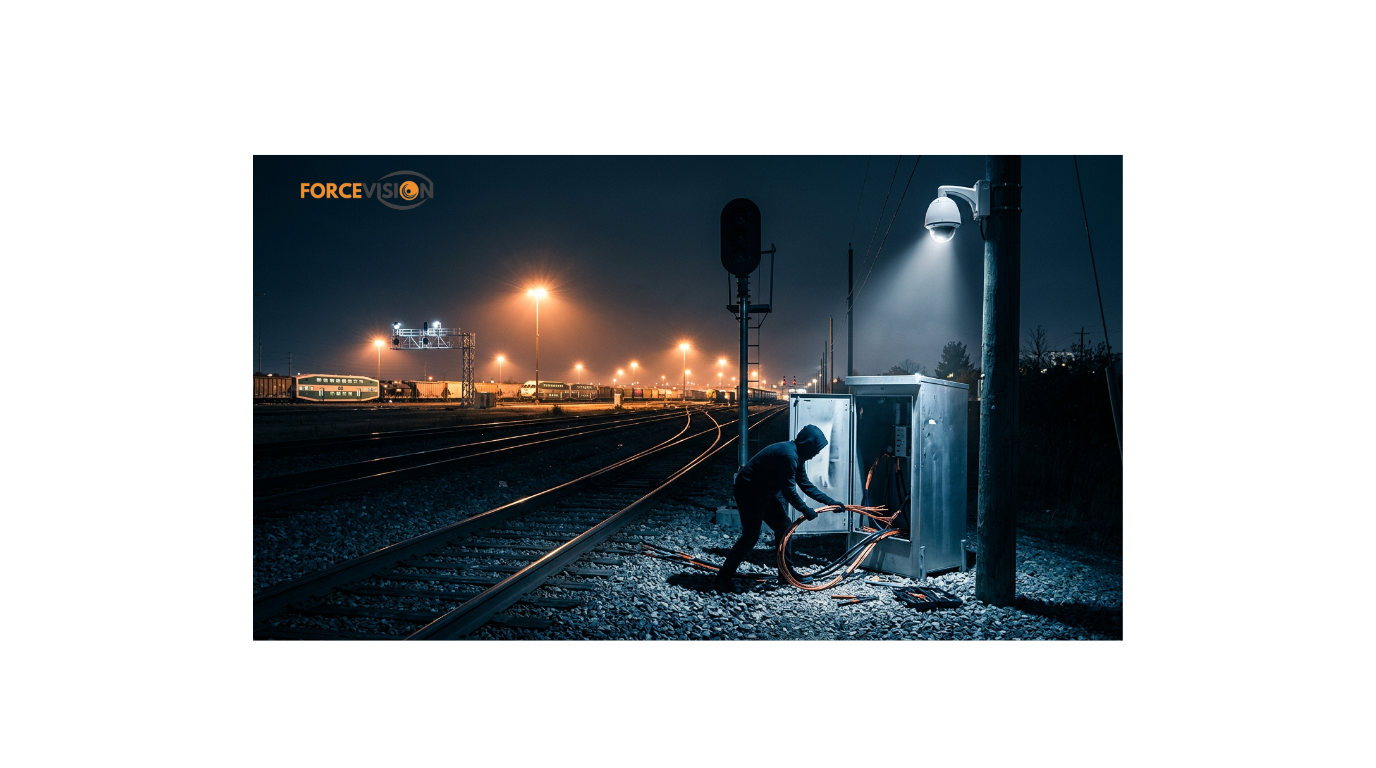
When Guelph police were called to a railway corridor after copper wiring was stripped from two signal cabinets, the direct value of the metal was minor—but damage to the specialized rail equipment topped $5,000 and triggered an active investigation. For rail operators across Southern Ontario, that story should feel uncomfortably familiar: small, opportunistic thefts that create outsized risk and cost.
This incident near York Road and Victoria Road South illustrates the vulnerability of rail infrastructure that often sits in exposed, difficult‑to‑patrol stretches of track. While trains continued operating safely in this case, it is not hard to imagine a slightly different scenario: energized cabinets, live signalling gear, and a thief willing to cut corners around safety to get to the copper.
Why should Ontario rail yards care about a single copper theft?
Incidents like the Guelph copper theft are rarely isolated. Across North America, rail corridors and yards have seen a pattern of:
-
Metal theft from signal cabinets and power infrastructure
-
Trespassing and vandalism in out‑of‑the‑way sidings
-
Targeted theft of tools, fuel, and high‑value components from work trains and maintenance areas
Beyond the repair bill, each event carries operational risk: signal failures, unexpected downtime, and potential knock‑on safety concerns if issues are not caught quickly. For railroads operating yards in Hamilton, Burlington, Milton, and the broader Golden Horseshoe, the footprint is simply too large to rely on roving patrols alone.
This is where properly designed industrial CCTV for Ontario rail yards stops being a “nice‑to‑have” and becomes part of the safety‑critical infrastructure. The cameras are no longer only about catching someone after the fact; they are about seeing problems develop early and documenting the full picture when something does go wrong.
How can 64‑camera systems protect long, complex rail yards?
A typical CN‑scale or short‑line rail yard in Southern Ontario stretches across hundreds of metres, often with multiple ladder tracks, interlockings, and adjacent access roads. A handful of pole‑mounted cameras will never give meaningful coverage. A 64‑camera industrial CCTV design, by contrast, lets you break the yard down into zones:
-
Perimeter and access control: Fixed bullet cameras on entrances, access roads, and fence lines, tuned for licence plate capture and vehicle recognition.
-
Critical infrastructure: Dome cameras focused on signal huts, switches, fuel stations, and electrical cabinets—particularly those in secluded spots.
-
Operational zones: PTZs covering ladder tracks, hump areas, and key switching zones to capture unsafe behaviour, near‑misses, or congestion.
-
Staging and storage: Overwatch of parked rolling stock, container stacks, and laydown areas where thieves look for tools and easy‑to‑move items.
When combined with proper lighting and IR‑capable cameras, this layout creates a continuous visual record across the full length of the yard, not just at the office building. If a copper theft occurs, investigators can track the suspect’s approach, time on site, and escape route instead of staring at a single grainy clip from the parking lot.
Where does video analytics change the game for theft and trespassing?
Modern NVR‑based video platforms allow rail operators to move from passive recording to active detection. For industrial CCTV for Ontario rail yards, several analytics have particular value:
-
Intrusion detection on virtual zones around signal cabinets and relay rooms
-
Line‑crossing alerts on trackside service roads outside normal work hours
-
Loitering detection near fence lines, gates, and bridge underpasses
-
Object removal alerts for areas where tools or cable drums are usually stored
Smart rules allow the system to ignore trains and scheduled work crews while flagging unexpected movement in sensitive areas at 2 a.m. Security staff—on site or at a remote monitoring centre—receive targeted notifications instead of trying to watch dozens of feeds all night.
Over time, video data can be tied back into operations. If analytics show a pattern of late‑night trespassers near a particular bridge, railroads can work with municipalities on lighting, fencing, or environmental design changes, instead of guessing in the dark.
How does CCTV support investigations and regulatory obligations?
Whenever a theft or vandalism incident occurs on railway property, operators face a mix of internal reviews, insurance questions, and, in serious cases, external regulatory scrutiny. High‑quality video makes each of those conversations more grounded.
Well‑designed systems provide:
-
Clear, time‑synced footage showing who accessed a cabinet, gate, or yard zone
-
Correlation with access control logs, locomotive telemetry, or signal system alarms
-
Documented proof of lighting levels, signage, and barrier conditions at the time of the incident
In the Guelph case, investigators are still working to identify suspects and understand how long the cabinets were exposed. If the site had comprehensive, high‑resolution coverage, police and rail operators would have a sharper picture of the timeline and methodology, and could better assess whether similar vulnerabilities exist elsewhere in the network.
What should Ontario rail operators review in their current CCTV?
For rail and yard operators in Hamilton, Toronto, Pickering, Brampton, and beyond, the starting point is an honest audit of how cameras are actually positioned today:
-
Are signal huts, bungalows, and remote cabinets covered—or just the depot?
-
Is your NVR capable of running analytics on 64+ channels, or are you limited to basic motion detection?
-
Do you have enough storage to retain meaningful history, especially for incidents discovered days later?
-
Can your security or operations teams easily retrieve and share clips with police or regulators?
If your answers rely on legacy analog cameras and overworked DVRs, the gap between your risk and your coverage is likely much larger than it appears.
ForceVision works with rail and yard operators across Southern Ontario to map these gaps and design practical upgrades—often in phases—that bring them to a true industrial CCTV standard. If you are wondering what an appropriate 64‑camera layout might look like for your specific yard, ForceVision can walk you through options in a no‑pressure assessment tailored to your infrastructure and budget.
What is the practical next step after a theft or near‑miss?
Whenever an incident occurs—whether a copper theft, a trespass near an active mainline, or vandalism of parked rolling stock—it is worth treating it as a free audit trigger. Review:
-
Where the suspect entered and exited
-
What cameras captured, and what they missed
-
How quickly teams were alerted and responded
-
Whether video helped or hindered the investigation
From there, you can prioritize upgrades: additional cameras at blind spots, higher‑resolution lenses for long sightlines, or analytics rules around specific assets. Each improvement reduces the chance that a minor theft turns into a major outage—or, in the worst case, a safety event with human consequences.
For rail operators stewarding complex networks across Southern Ontario, industrial CCTV for Ontario rail yards is now part of core infrastructure. Incidents like the Guelph copper theft are reminders that even “small” crimes can carry big costs—and that the right combination of cameras, analytics, and storage can turn a vulnerable yard into a well‑watched, well‑documented environment.
FAQ
Q1: How many cameras does a typical Ontario rail yard need?
A1: Most medium‑to‑large rail yards require at least a 64‑camera design to properly cover perimeters, ladders, signal infrastructure, and staging areas, especially when using multiple PTZs.
Q2: Can CCTV really deter copper and equipment theft?
A2: Visible cameras, signage, and lighting act as deterrents, while analytics‑driven alerts and recorded evidence increase the likelihood of detection, making yards far less attractive to thieves.
Q3: How long should rail yards retain CCTV footage?
A3: Many operators target 30–90 days of retention to cover delayed discovery of theft, technical investigations, and insurance requirements; high‑risk yards may aim higher.
Q4: Can existing analog cameras be integrated into a new rail yard system?
A4: Yes. Encoders and hybrid NVRs can bring legacy cameras into a modern platform, letting rail operators phase upgrades over time without losing visibility.


