

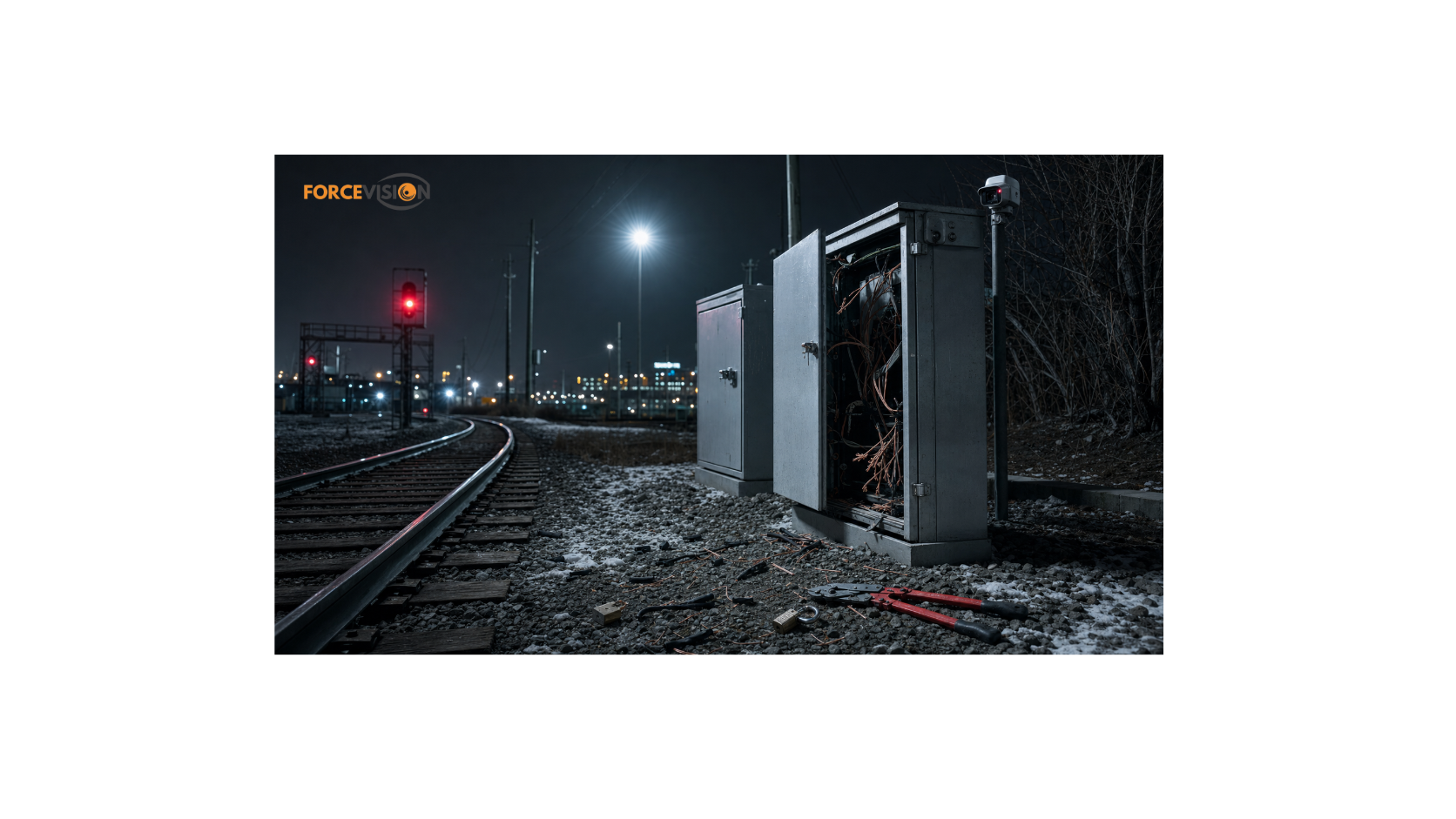
Copper Wire Theft Near Guelph: A Wake‑Up Call for Ontario Rail Yards
When thieves stripped copper wiring from signal cabinets near York Road and Victoria Road South in Guelph, they caused more than $5,000 in damage to specialized railway equipment, far exceeding the scrap value of the stolen metal. Train operations were not immediately disrupted, but the incident highlighted just how vulnerable above‑ground infrastructure can be when perimeter security and video coverage are patchy.
For rail operators across Southern Ontario — from CN‑scale yards in Toronto to regional sidings near Kitchener‑Waterloo — this sort of low‑visibility, after‑hours theft is a clear warning sign. It shows how quickly a few minutes of undetected trespassing can turn into damaged assets, service risks, and unplanned maintenance costs.
Why Copper Theft Hits Rail Yards So Hard
Rail infrastructure combines high‑value components with large, often lightly staffed footprints. A single stretch of track can include:
-
Signal cabinets and control boxes set back from public roads
-
Power and communications cable runs that are difficult to patrol
-
Access roads, utility corridors, and easements with limited lighting
Copper theft is attractive because offenders can work quickly, often at night or during low‑traffic windows, and the resale market for scrap metal remains active in most regions. The direct value of the metal may be modest, but the indirect cost of damaged equipment, emergency repairs, and potential service disruptions adds up fast.
In the Guelph incident, the cabinets were not energized at the time, which avoided a worst‑case safety scenario, but the repair bill still exceeded the value of what was taken. That pattern is typical: infrastructure damage and downtime cost far more than the scrap leaving the site.
How Can 64‑Camera Systems Reduce Rail Yard Incidents?
For large rail yards and main‑line junctions, a 64‑camera CCTV platform is no longer “nice to have”; it is the baseline needed to see what is happening across tracks, sidings, and perimeter assets in real time. A well‑designed system focuses less on sheer camera count and more on coverage logic:
-
Fixed bullet cameras covering long straight sections of fence or track approaches
-
PTZ (pan‑tilt‑zoom) cameras at key junctions and signal clusters
-
Dome cameras protecting access roads, gates, and parking areas
-
Thermal or low‑light cameras for rural stretches and unlit easements
A 64‑camera design for an Ontario rail yard usually combines these devices to create overlapping “safety nets” around equipment cabinets, switching infrastructure, and employee pathways. Instead of leaving a signal hut on the edge of town in a blind spot, operators can assign at least one dedicated camera view for each cluster of high‑value assets.
What Should Ontario Rail Yards Watch First?
When budgets or timelines are tight, rail operators cannot harden everything at once. In practice, the first priorities for CCTV coverage typically include:
-
Signal and power cabinets along busy corridors or near public roads
-
Perimeter fences where past trespassing or vandalism has been reported
-
Remote sidings or layover tracks where trains may sit unattended overnight
-
Employee parking and crew access points, which also matter for worker safety
The Guelph theft shows how quickly opportunistic offenders can target visible infrastructure. By treating every cabinet and cable run as a standalone “micro‑site” that deserves at least one camera view, yards avoid the common problem of focusing only on mainline operations while ancillary assets remain exposed.
Why Active Monitoring Matters for Rail Infrastructure
Research on construction and industrial sites shows that passive cameras — those that only record — have limited deterrent effect if nobody is watching in real time. In contrast, systems with active monitoring, where live operators verify alerts and can initiate responses, deliver measurable reductions in theft and trespass.
For rail yards, an integrated approach often includes:
-
Video analytics that detect human movement in restricted zones after hours
-
Virtual tripwires drawn around signal cabinets, power huts, and switching gear
-
Automatic alerts to a monitoring centre that can review feeds within seconds
-
Pre‑recorded audio challenges or live voice‑down capabilities to warn intruders
This combination turns cameras from a forensic tool into an active risk control. Trespassers approaching a cabinet fence may hear a voice warning before they ever touch a lock, and operators can escalate to security or police when behaviour does not change.
Integrating CCTV with Rail Operations and Maintenance
A 64‑camera system brings extra value when it is integrated with existing rail operations, not just bolted on as a standalone security layer. Practical integrations include:
-
Linking alerts to maintenance ticketing systems so damage is logged and tracked
-
Providing operations centres with live views during switching, shunting, or incident response
-
Recording work crews near energized equipment for safety reviews and training
That way, the same cameras used to deter copper theft also support safe work practices, root‑cause analysis after near‑misses, and better planning for future upgrades. When capital budgets are tight, multi‑use systems are easier to justify.
How ForceVision Supports Ontario Rail Yards
If you are looking at your current yard map and realizing there are blind spots around signal cabinets, switching infrastructure, or perimeter access points, you are not alone. Many Ontario rail operators are finding that legacy 16‑camera systems designed a decade ago no longer align with today’s risk profile.
ForceVision works with rail and yard operators across Southern Ontario to design 64‑camera and larger CCTV platforms that specifically address infrastructure like copper‑rich cabinets and remote sidings. By walking your site virtually or in person, we can help you prioritize coverage, choose the right mix of fixed and PTZ cameras, and decide where active monitoring will make the biggest difference.
Practical Next Steps for Rail Yard Leaders
The Guelph copper theft is a reminder to review not only locks and fencing but also how your CCTV system actually sees the site after hours. A practical checklist for the next safety meeting could include:
-
Listing all signal and power cabinets, with notes on current camera coverage
-
Reviewing at least one night‑time clip from each critical camera view
-
Checking whether analytics or alerts are configured around restricted infrastructure
-
Confirming response playbooks with maintenance, security, and operations teams
Even modest upgrades — a few added cameras, analytics rules, or a monitoring contract — can materially reduce the chances that your next maintenance callout is triggered by an avoidable theft.
FAQ
Q1: How many cameras does a typical Ontario rail yard need?
Most medium to large rail yards in Ontario now require at least 64 cameras to cover tracks, sidings, access roads, and perimeter assets, with larger hubs sometimes exceeding 100 cameras.
Q2: Do PTZ cameras replace fixed cameras in rail environments?
PTZ units are ideal for scanning larger areas and zooming into events, but they do not replace fixed cameras; fixed devices provide continuous, reliable coverage of critical assets like signal cabinets and gates.
Q3: Is active monitoring necessary for all cameras in a yard?
Not every camera needs live monitoring, but critical zones such as signal cabinets, main gates, and remote sidings benefit from active oversight with analytics and human verification.
Q4: How long should rail yards retain CCTV footage?
Retention policies vary, but many rail operators target at least 30–60 days for core cameras, extending further for high‑risk areas or where regulatory and investigative needs are higher.


