

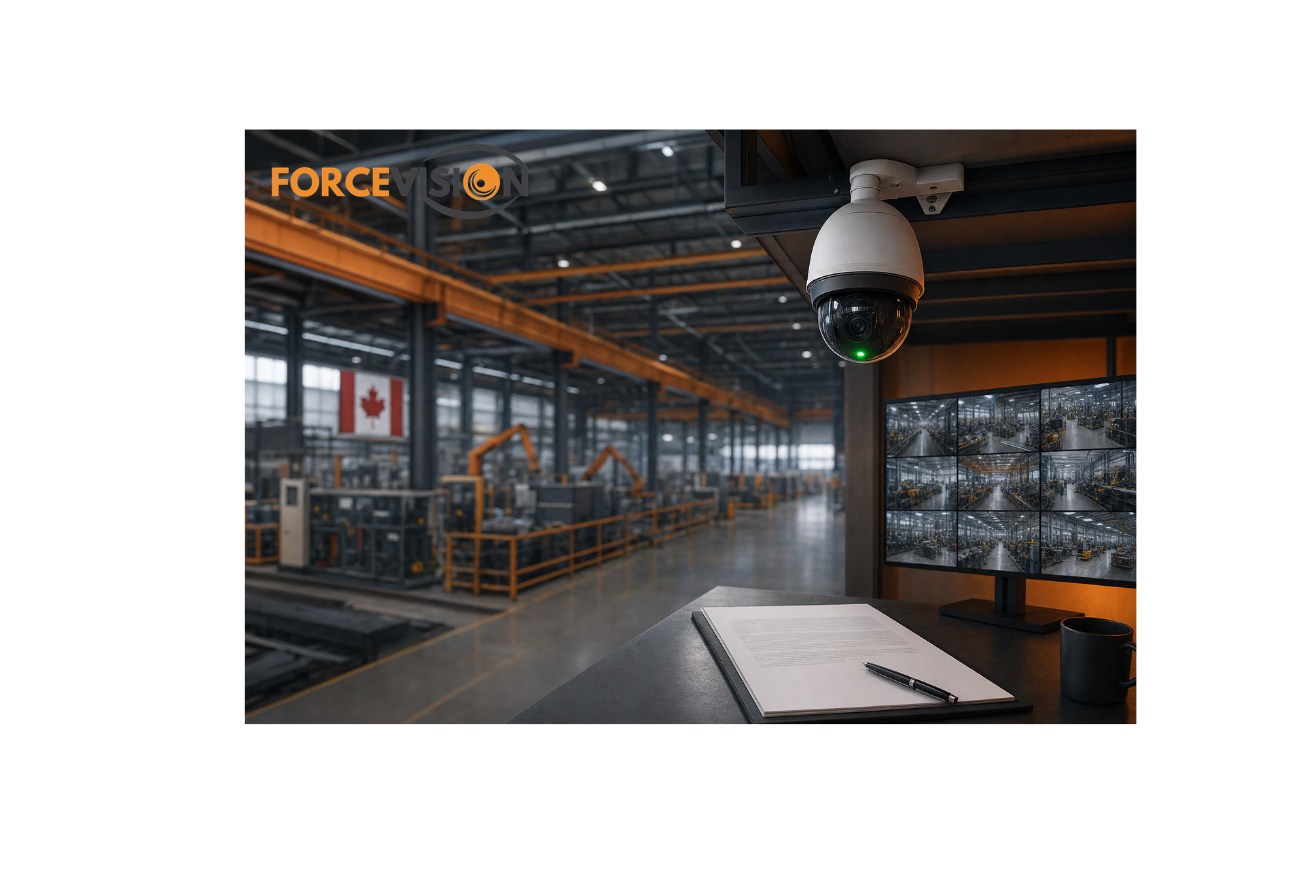
When a major incident happens at an industrial site — a fire, serious injury, or large theft — insurers want to know two things: what happened, and what you did to prevent it. For large rail yards, manufacturing plants, logistics hubs, and warehouses, the presence (or absence) of industrial‑grade CCTV is now a visible indicator of risk.
Canadian insurers do not publish formal “camera count” requirements, but in practice many expect at least 30 days of recorded footage at commercial sites, with stronger expectations at large, high‑value industrial locations. As events like the Kimberly‑Clark distribution centre fire highlight the size of potential losses, that informal bar is likely to rise.
How do insurers view industrial CCTV today?
From an insurer’s perspective, cameras are about more than catching thieves. Industrial CCTV and insurance risk in Canada are increasingly linked through three lenses: frequency of loss, severity of loss, and clarity of claims.
-
Frequency: Cameras and analytics can deter casual theft and unsafe behaviour, reducing routine claims.
-
Severity: Better visibility can limit how far an incident spreads, for example by catching unsafe practices before they lead to a fire.
-
Clarity: High‑quality footage makes it easier to understand what happened and to resolve disputes between multiple parties.
In some sectors, underwriters now ask specific questions about camera coverage, monitoring, and retention as part of the application or renewal process. While CCTV alone does not guarantee a lower premium, it can support a broader risk‑management story.
Why is camera quality and coverage so important?
Not all footage is equal. Grainy, poorly placed cameras that miss critical zones can frustrate investigators and underwriters rather than help them. Industrial sites have large footprints, tall structures, moving equipment, and complex traffic patterns, which is why many risk consultants now advocate for 64‑camera systems as a baseline.
Strong industrial CCTV and insurance risk management go hand‑in‑hand when coverage includes:
-
All main building entrances and shipping/receiving doors
-
High‑value inventory and finished‑goods storage areas
-
Fuel, chemical, and compressed‑gas storage
-
Critical production lines and maintenance areas
-
Exposed yard storage and parking areas
When an event occurs, the ability to pull multiple angles from before, during, and after the incident gives insurers a much clearer picture of causation and responsibility.
How does retention length affect claims?
In Canada, a 30‑day retention period is widely accepted as a baseline for commercial CCTV, influenced by guidance from the federal privacy commissioner and typical insurance expectations. However, large industrial operators often face claims or investigations that stretch over weeks or months.
For example:
-
An internal theft ring that unfolds over several weeks
-
A workplace injury where different parties dispute what happened
-
A near‑miss that later becomes part of a regulatory review
In these cases, 60‑ or 90‑day retention in critical zones can be invaluable. Modern NVR and VMS platforms allow retention policies to be tailored by camera, so a loading dock might keep footage for 90 days while a low‑risk corridor keeps only 30.
From an insurer’s viewpoint, this kind of deliberate retention strategy demonstrates that an operator understands its risks and configures its CCTV accordingly.
Beyond theft: safety, HR, and operational value
Underwriters increasingly recognize that industrial CCTV generates value well beyond classic “security.” By supporting safety, HR, and operations, a system can help stabilize the risk profile of a site in multiple ways:
-
Safety: Reviewing footage of near‑misses in rail yards, plants, or yards helps refine procedures and training.
-
HR: Cameras provide objective context in investigations of conduct, harassment, or rule violations.
-
Operations: Video analytics can identify bottlenecks, congestion points, and inefficient routings that increase exposure to accidents.
When operators use footage to make demonstrable improvements — changing forklift routes, redesigning loading zones, or enforcing PPE rules — they can share those changes with their insurers as part of a proactive risk‑management narrative.
How can ForceVision help connect CCTV and insurance?
Many industrial leaders know they “should” have better cameras, but they are unsure how to connect that investment to tangible insurance benefits. A key step is designing the system with risk conversations in mind from day one.
ForceVision works with large sites across Southern Ontario to plan 64‑camera and larger CCTV platforms that align with insurer questions and loss scenarios, not just IT or security wish lists. That can include mapping coverage to known hazard areas, setting retention per camera in line with policy language, and ensuring video is accessible when adjusters or investigators need it most.
If you are preparing for renewal or looking ahead to a major expansion, ForceVision can support a no‑pressure review of how your current CCTV setup will look through the eyes of an underwriter — and what practical upgrades might make a difference.
Three actions to take before your next renewal
For risk, safety, and finance leaders at industrial sites, there are some straightforward steps you can take this quarter:
-
Audit your current camera coverage against your top ten loss scenarios, not just against perimeter lines.
-
Confirm your retention policy and storage capacity, ensuring that critical zones meet or exceed 30 days and align with internal investigation needs.
-
Document how you have used CCTV footage in the past year to improve safety, security, or operations, and be ready to share that story with your insurer.
Industrial CCTV and insurance risk in Canada are only going to become more linked over time. The operators who treat video systems as strategic risk tools — rather than commodity hardware — will be best positioned to demonstrate control and resilience.
FAQ
Q1. Will installing more cameras automatically lower my premium?
Not automatically. Cameras are part of a bigger risk picture, but a well‑designed system with good coverage, retention, and usage can support negotiations and help avoid surcharges after major losses.
Q2. How long should we keep footage to support investigations?
Thirty days is a common minimum, but many industrial sites keep 60–90 days in high‑risk zones to support internal investigations and complex claims.
Q3. Do insurers care about analytics, or just recording?
Analytics that reduce incident frequency and severity — for example by detecting unsafe behaviours — strengthen your risk story, especially when you can show how alerts led to real process changes.
Q4. What’s the best way to involve insurers in CCTV planning?
Discuss your plans with your broker or underwriter early, share layouts, and ask what information would help them assess risk more favourably once the system is in place.


