

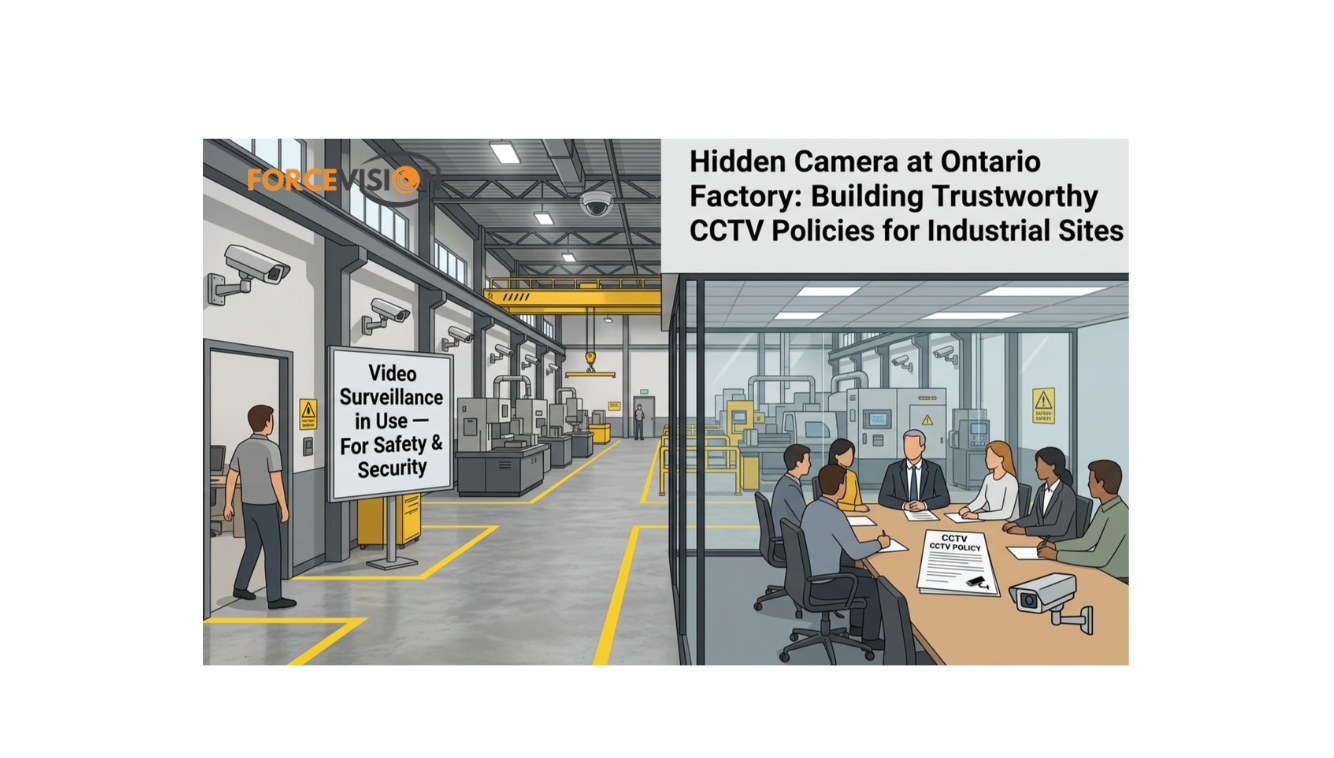
A Hidden Camera Incident That Shakes Trust
When reports surfaced that a hidden camera had been discovered in a women’s washroom at an Ontario factory, the reaction from workers and the public was immediate and visceral. The idea that someone could secretly record employees in a private space goes beyond bad practice—it is a serious breach of trust and likely a violation of both workplace and privacy laws.
For large industrial operators—rail yards, energy sites, manufacturing plants, and distribution hubs—this kind of incident is a nightmare scenario. Many are actively expanding CCTV coverage to protect assets and improve safety, yet a single misuse of video technology can undermine years of effort to build a safe, respectful culture. The lesson is clear: how you deploy cameras matters as much as how many cameras you install.
Where Cameras Belong—and Where They Absolutely Do Not
In an industrial setting, cameras are appropriate in many areas where people and assets interact: yards, production floors, loading docks, corridors, and gates. In these spaces, workers generally understand that activity may be monitored for safety, security, and operational reasons.
There are, however, red‑line locations where cameras simply do not belong:
-
Washrooms and change rooms.
-
Designated prayer or quiet rooms.
-
Union offices or private counselling spaces.
Placing a camera in these areas is not only deeply inappropriate, it is likely to run afoul of Ontario workplace harassment, violence prevention, and privacy frameworks. Even if a hidden camera was installed by an individual rather than the company, questions will quickly arise about overall governance: How was this possible? Who has access to cameras and cabling? What controls exist?
Why Clear, Written CCTV Policies Are Essential
As industrial sites move toward 64‑camera platforms and beyond, the need for clear, written CCTV policies grows. Without them, even well‑intentioned deployments can creep into grey areas, and employees will fill in the gaps with their worst assumptions.
A robust policy should spell out:
-
The legitimate purposes of video surveillance (asset protection, safety, incident investigation, regulatory compliance).
-
The exact types of areas that may be monitored and those that are off‑limits.
-
Who can access live feeds and recordings, under what conditions, and with what approvals.
-
How long footage is kept and how it is securely stored and destroyed.
-
How CCTV intersects with workplace investigations, including harassment cases, under Ontario rules.
Publishing this policy, reviewing it in orientations, and revisiting it with joint health and safety committees goes a long way toward making CCTV feel like a shared safety tool rather than a one‑sided surveillance weapon.
Using CCTV to Support, Not Undermine, Workplace Harassment Protections
Ontario requires employers to investigate workplace harassment complaints and maintain a safe, respectful environment. Properly governed CCTV can be an important ally in this effort—for example, by providing objective evidence in disputed incidents in corridors, break areas, or yards.
The hidden camera case in the Ontario factory is the dark mirror of that idea: video used as a tool of harassment, not protection. To stay on the right side of the line, industrial operators should:
-
Restrict cameras to common and operational areas, never private spaces.
-
Limit who can review footage from sensitive areas, with logs and approvals.
-
Use video as one data point among many in investigations, not the sole arbiter.
-
Make it clear that any unauthorised installation or use of cameras is a serious misconduct issue.
Handled this way, CCTV can build confidence that if something happens in a semi‑public workplace space—a threat, a shove, a pattern of harassment—there will be objective evidence available.
Involving Employees and Unions in CCTV Decisions
For large rail, manufacturing, logistics, and energy operations, it is common to have unionised workforces and formal consultation structures. Bringing those stakeholders into CCTV discussions early can prevent misunderstandings and resistance later.
Practical steps include:
-
Sharing draft camera layouts with joint health and safety committees.
-
Walking representative employees through how footage is stored, accessed, and audited.
-
Agreeing on safeguards around performance management so CCTV does not become a constant punitive tool.
When workers understand that cameras are there to protect them from unsafe behaviour, theft of their tools, or false allegations—not to watch their every move—the same technology that might have sparked distrust can instead support retention and morale.
How ForceVision Designs CCTV with Privacy and Trust in Mind
ForceVision focuses on industrial asset protection and safety, but also recognises that long‑term success depends on worker trust. That is why a typical 64‑camera design engagement includes not just technical drawings, but policy and governance conversations.
ForceVision can help your leadership team:
-
Distinguish between appropriate and inappropriate camera locations on rail yards, plants, and terminals.
-
Define access controls, logging, and retention settings that align with Ontario and federal guidance.
-
Prepare for conversations with unions and health and safety committees about why and how cameras are being added.
If the Ontario hidden camera case has raised questions in your organisation, ForceVision can support a structured review of your existing CCTV deployment and help you build a policy framework that protects both your assets and your people.
FAQs: Industrial CCTV, Privacy, and Policy in Ontario
Is it ever acceptable to have cameras in washrooms or change rooms?
No. Cameras in washrooms or change rooms are widely considered unacceptable and likely illegal, and they fundamentally violate employee privacy and trust.
Do we need consent from employees to use CCTV in the workplace?
In Canada, you generally need to provide clear notice of surveillance and ensure that your use of CCTV is reasonable, proportional, and tied to legitimate business needs, especially in Ontario workplaces.
How long should we retain footage from production and yard areas?
Retention periods vary by risk and regulation, but many industrial sites keep 30–60 days of footage, with specific views (like high‑risk yards) stored longer if justified and documented.
Who should be able to access CCTV footage?
Access should be limited to specific roles (e.g., security, safety, HR) with appropriate training, audit trails, and policies governing when and why footage can be reviewed.


