

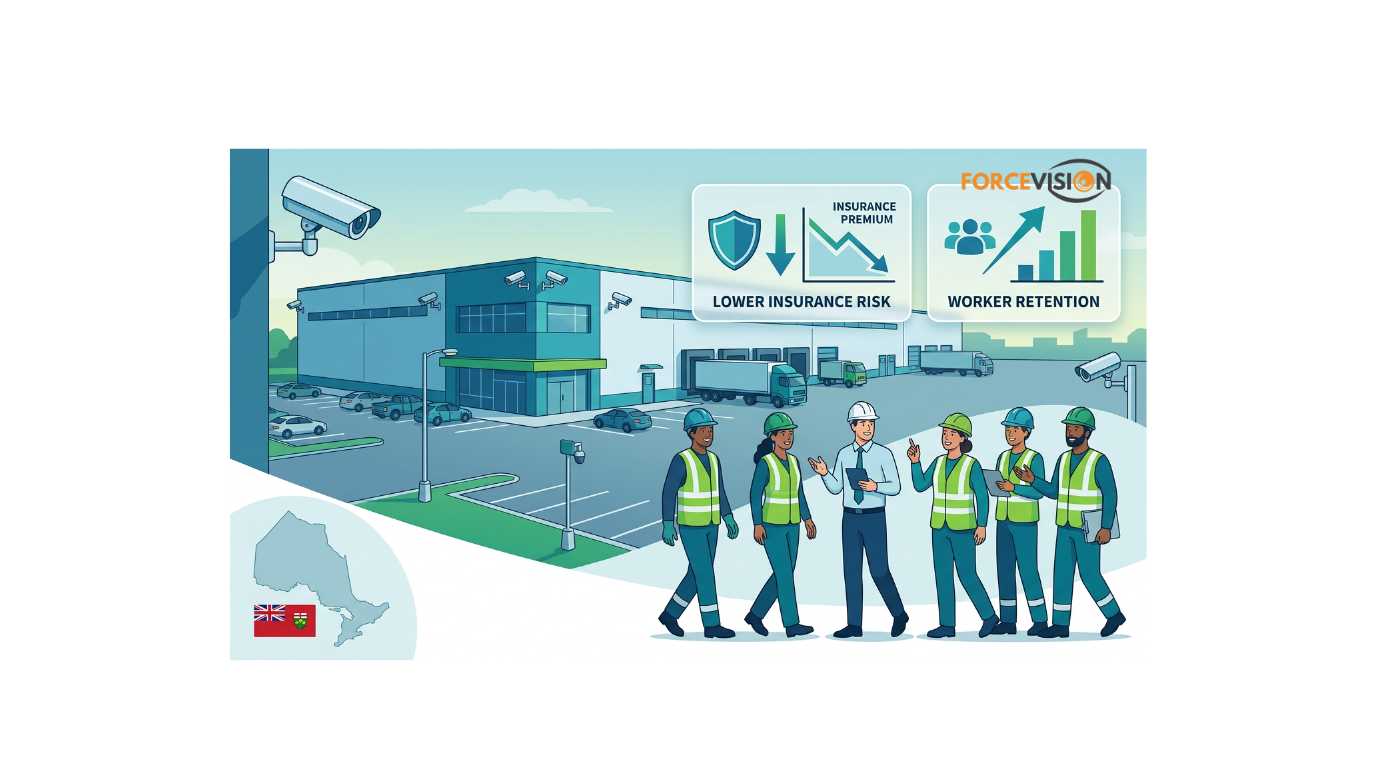
Insurers across Canada are paying close attention to industrial risk as cargo theft, construction losses, and equipment incidents mount. At the same time, industrial operators face intense competition for skilled workers, from electricians and welders to forklift operators and heavy equipment techs. Modern surveillance is increasingly sitting at the intersection of these pressures: effective CCTV can both reduce insurance exposure and contribute to a safer, more stable workplace that employees want to stay in.
For large rail yards, manufacturing plants, logistics hubs, and energy facilities in Southern Ontario, the question is no longer whether to deploy cameras, but how to design systems that deliver measurable insurance and workforce benefits. Thoughtful planning can turn industrial CCTV and insurance benefits for Ontario industrial sites into a virtuous cycle: fewer losses, better claims outcomes, and a culture that signals “we take safety and security seriously.”
How do insurers view industrial CCTV today?
Recent reports on cargo and property theft highlight rising losses and evolving tactics, prompting insurers to scrutinise risk controls more closely. For industrial clients, that means underwriters are looking beyond checkboxes to understand how surveillance systems are designed, monitored, and integrated with operations.
Insurers want to know:
-
Are critical areas actually covered by cameras, or just the front gate?
-
Is footage retained long enough to support investigations and claims?
-
Are there documented procedures for reviewing footage and responding to alarms?
Sites that can answer “yes” to these questions—and demonstrate it with site plans and policy documents—are better positioned when negotiating premiums and coverage terms.
How does CCTV improve claims and loss control?
When an incident occurs, high‑quality video can make the difference between a disputed claim and a swift resolution. Clear footage of a cargo theft, equipment accident, or vandalism event can establish timelines, show the method of entry, and confirm inventory loss. It also helps identify process gaps—such as unsecured gates or unauthorised after‑hours access—that can be addressed to prevent recurrence.
From a loss‑control perspective, a 64‑camera system covering perimeters, docks, and high‑value areas allows risk managers to move from guesswork to evidence‑based improvements. For example, repeated near‑misses at a particular intersection between forklifts and pedestrians can be spotted on video, prompting layout changes or new signage.
How does CCTV contribute to worker safety and retention?
Skilled workers are more likely to stay at sites where they feel physically safe and where incidents are investigated fairly. Industrial CCTV can support both goals when implemented with clear policies and communication.
Safety: Cameras in high‑risk zones—such as rail tracks, loading docks, and heavy equipment corridors—help detect unsafe behaviours, confirm PPE use, and reconstruct incidents to improve training. Workers see that management is serious about preventing injuries, not just about catching mistakes.
Fairness: When something goes wrong, footage can protect employees from unfair blame by showing the full context of an event. This builds trust in the investigation process and reduces the perception that discipline is based on hearsay.
Culture: When industrial CCTV and insurance benefits for Ontario industrial sites include clear privacy and usage guidelines, workers are more likely to view cameras as a safety tool rather than a surveillance burden.
What design choices support both insurance and workforce goals?
Aligning CCTV with insurance and workforce needs involves a few practical choices:
-
Comprehensive coverage of risk areas: Perimeters, docks, production lines, and fuel or chemical storage areas should all be visible.
-
Sufficient retention: 30–90 days of storage allows time for late‑reported incidents and thorough investigations.
-
Clear access controls: Defined roles for who can view live and recorded footage, with audit trails, support privacy and governance.
-
Integration with safety and HR: Procedures for when and how footage is accessed for safety reviews or HR investigations help prevent misuse.
These elements can be documented and shared with insurers and employees alike, showing that the system is designed for protection, not surveillance for its own sake.
How can ForceVision help industrial sites balance risk and culture?
ForceVision works with industrial clients to design CCTV systems that satisfy insurers, support security and safety teams, and respect workforce expectations. That begins with understanding your claims history, insurer requirements, and employee concerns, then translating those into a technical and governance design.
If you are rethinking your surveillance posture after a major claim or near‑miss, ForceVision can help you map out where 64‑camera‑scale coverage makes sense, how analytics and remote monitoring fit in, and what policies you need to put around the system. These conversations are collaborative and no‑pressure, focused on fitting security into your existing culture rather than imposing a one‑size‑fits‑all template.
What should Ontario industrial leaders review this year?
As you head into renewal cycles and workforce planning, consider three quick reviews:
-
A coverage audit: Can your current cameras clearly document a serious incident in every critical area?
-
A policy review: Are your CCTV policies up to date, clear, and communicated to staff?
-
A claims review: Where have you experienced friction with insurers, and could better video evidence have helped?
Answering these questions will clarify whether your current CCTV setup is protecting your balance sheet and your people—or simply existing in the background.
FAQ
Q1: Can better CCTV actually reduce insurance premiums?
A1: While each insurer differs, robust, well‑documented CCTV coverage and procedures can support improved terms or mitigate increases, especially after loss‑control reviews.
Q2: How do we address employee privacy concerns?
A2: Clear policies, limited access, defined retention periods, and a focus on safety and asset protection help show that CCTV is used responsibly.
Q3: Should safety teams have direct access to CCTV?
A3: Many industrial sites give safety teams controlled access for incident review and training, within a governance framework that respects privacy and HR processes.
Q4: Does CCTV help with fraudulent claims?
A4: Yes; video can confirm or refute details in injury or loss claims, helping protect both the organization and honest employees.


