

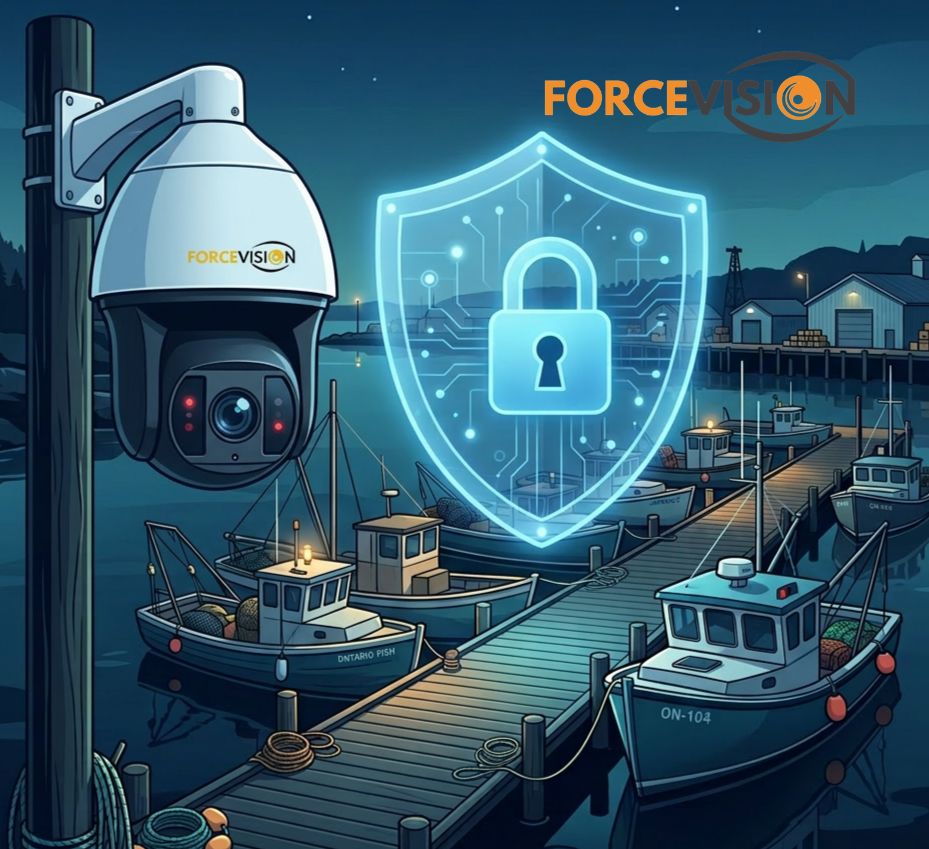
Hook – A Costly Lesson Near Thessalon
In early March 2026, Ontario Provincial Police launched an investigation after vandals targeted a commercial fishing operation near Thessalon on Lake Huron. The suspects allegedly cut and destroyed twelve 100‑yard commercial fishing nets, tossed them onto the ice, and stole roughly 1,500–1,600 pounds of whitefish and lake trout—losses estimated at around $10,000 in product and equipment. Snowmobile tracks were visible at the scene, but by the time the fisherman arrived, the damage was already done and the thieves were long gone.
For any industrial operator, that kind of hit is not just about the dollar figure on the gear. It’s downtime, missed quotas, disrupted supply contracts, and staff who show up to work only to find their efforts wiped out by someone else’s criminal “shortcut.” For commercial fish and marine operators across Northern Ontario and the Great Lakes, this incident is a stark reminder: unsecured assets on the water and in remote yards are tempting targets.
This is exactly the type of risk that modern CCTV systems for Ontario commercial fishing and marine yards are designed to reduce—especially when they’re built like industrial systems, not like simple retail setups.
Why This Matters to Large-Scale Industrial and Marine Operators
The Thessalon incident may sound like a one‑off crime, but the underlying pattern will feel familiar to anyone running a high‑value outdoor operation. Whether you’re managing:
-
A commercial fishing company with multiple vessels, net sheds, and shoreline facilities
-
A marine logistics yard handling containers, fuel, and equipment
-
An industrial port or small freight terminal serving larger rail or trucking networks
you face the same core issue: expensive assets parked in exposed environments, often staffed lightly at night, and surrounded by water or open land that gives intruders multiple approaches.
When nets, gear, or fuel disappear from a marine yard, it doesn’t just show up as “theft” on a police report. It cascades into:
-
Lost production days while you repair or replace equipment
-
Extra overtime to make up missed quotas
-
Strained relationships with buyers and processors
-
Higher insurance premiums after repeated claims
For rail‑adjacent marine terminals and industrial ports, it’s even bigger. A single incident involving tampered containers, fuel siphoning, or vandalized rolling stock can cost hundreds of thousands of dollars in direct loss and downstream delays.
That’s why industrial operators increasingly treat video surveillance as part of their core asset‑protection strategy, not an afterthought. The goal is not just to “have a camera,” but to build a system that sees the yard, the shoreline, and the water approaches with the same discipline as an intermodal yard watching rail cars.
What Industrial-Grade CCTV Looks Like in a Marine Environment
Most commercial fish operators and marine yards already have some form of security—maybe a couple of cameras over the main driveway and building doors. But CCTV systems for Ontario commercial fishing and marine yards need to go further if they’re going to actually deter and capture incidents like the Thessalon vandalism.
Industrial‑grade setups typically include:
-
High‑resolution bullet and PTZ cameras over nets, gear yards, and mooring areas
These cover where nets are stored, loaded, and soaked in the water, capturing faces, vehicles, and sleds with enough detail to be useful to investigators. -
Thermal and low‑light cameras for pre‑dawn and nighttime operations
Remote marine sites often have minimal lighting, especially over water. Thermal or starlight cameras help detect people approaching by boat, truck, or snowmobile even in low visibility. -
Perimeter coverage of access routes
In Thessalon, OPP noted numerous snowmobile tracks. For a marine operator, that means placing cameras not just on the dock, but along the shore‑access points, snowmobile or ATV trails, and service roads that criminals might use. -
Cameras positioned for licence plate and vehicle identification
In remote environments, law enforcement often relies heavily on vehicle descriptions and plates. Tight‑angle cameras at strategic chokepoints can provide that data. -
Central NVR systems with long‑term storage
Industrial operators need to store video for weeks or months, not just a handful of days, to support investigations that unfold slowly or involve patterns of attempted theft.
These are the same principles that railroads and industrial logistics yards use to watch miles of track, rows of containers, and equipment staging areas. The environment is different—water instead of rail—but the asset‑protection logic is identical.
Turning Cameras into a Deterrent, Not Just a Record
A common criticism of CCTV is that “cameras don’t physically stop anyone.” That’s true—yet research shows that well‑designed surveillance can change offender behaviour by increasing their perception of being watched and caught. The way you deploy cameras makes the difference between a passive recording system and an active deterrent.
For marine and commercial fishing operations, that means:
-
Visible cameras and signage at main access points
Clear indications that the property is under video surveillance and that footage is shared with OPP or local law enforcement. -
Layered visibility from shore to water
If a thief can see that cameras cover the shoreline, the net lines, and the main access routes, the perceived risk of approaching increases significantly. -
Tying video to lighting and alarms
Integrating cameras with motion‑triggered lighting or audible alerts can make intruders feel exposed and hurried, often causing them to abort or shorten their attempts. -
Rapid access to footage for investigators
The faster you can provide clear, timestamped footage of suspects, vehicles, and approaches, the more likely police can tie incidents together across multiple sites and operators.
For large industrial marine terminals, these same principles scale up: 64‑camera and larger systems can provide full yard‑wide and dock‑wide coverage, with zones dedicated to fuel storage, container stacks, rail spurs, and restricted access piers.
How CCTV Supports Insurance, Compliance, and Contracts
Beyond direct theft prevention, CCTV systems for Ontario commercial fishing and marine yards can support the business side of operations in several important ways.
-
Insurance claims and premium negotiations
Detailed footage of incidents provides strong evidence for claims, reducing disputes about loss value or circumstances. Over time, documented improvements in security can help justify premium reductions. -
Worker safety and liability management
Cameras that cover dock operations, loading areas, and equipment handling can help reconstruct incidents and support training to prevent recurrence. This is similar to how large industrial plants use video to coach safe behaviours and reduce injury rates. -
Regulatory and contract compliance
Many buyers and logistics partners expect proof that high‑value goods are stored and handled in controlled environments. Demonstrating a robust surveillance system can strengthen your position in contract negotiations and audits.
When marine operations connect the dots between asset protection, safety, and operational continuity, surveillance transitions from “another expense” to part of the core risk‑management toolkit.
Designing a System for Ontario Marine Conditions
The Great Lakes and Northern Ontario bring specific challenges: snow and ice, high winds, lake fog, and freeze‑thaw cycles that can be brutal on equipment. A camera system designed for a shopping plaza simply won’t last.
Industrial‑grade marine CCTV should consider:
-
Weather‑rated housings and corrosion‑resistant materials for cameras installed near salt‑ or freshwater
-
Heaters and blowers to keep domes clear of ice, snow, and condensation
-
Stable mounting and vibration control on masts, poles, or building corners exposed to wind
-
Secure networking for remote locations, including wireless bridges to connect distant docks or yard areas back to a central NVR
-
Redundant storage and power in case of outages during storms, when sites may be most vulnerable
This is where working with a partner experienced in large‑scale industrial and logistics environments makes a difference. The same engineering mindset used for rail yards, ports, and heavy manufacturing campuses applies directly to marine operations.
How ForceVision Can Help
ForceVision designs surveillance systems for complex, high‑value industrial environments across Southern Ontario and beyond—rail‑served logistics yards, manufacturing plants, and critical infrastructure sites. That same expertise translates naturally to commercial fishing operations, marine yards, and small industrial ports that need more than “basic security cameras.”
If you are wondering what a surveillance system might look like for your shoreline or marine property, the team at ForceVision can walk you through your options with a free assessment. ForceVision helps industrial operators design camera layouts that cover access routes, dock operations, gear storage, fuel, and high‑risk zones so you can protect your assets, support your crews, and respond effectively if something does go wrong.
Closing – From One Incident to a Stronger Standard
The Thessalon vandalism is a painful reminder of how vulnerable unmonitored assets can be. But it’s also an opportunity for commercial fishing and marine operators across Ontario to step back and ask: “If someone targeted our nets, gear, or yard tonight, what would we actually see?”
By investing in CCTV systems for Ontario commercial fishing and marine yards that are designed like industrial systems—not simple storefront kits—you can change what happens in those critical overnight hours. You give law enforcement clear evidence, you send a strong deterrent signal to would‑be thieves, and you show your team and partners that you take asset protection seriously.
The next time a snowmobile or truck pulls up to your site after dark, the difference between “we think something happened” and “here’s exactly who did it and how” will come down to what your cameras can see.
FAQ – CCTV for Commercial Fishing and Marine Yards
1. Do cameras really help in remote marine locations?
Yes. While cameras don’t physically stop a crime, visible surveillance significantly increases the perceived risk for offenders and provides crucial evidence for police investigations.
2. What types of cameras work best near water and docks?
Industrial‑grade bullet and PTZ cameras with weather‑rated housings, low‑light or thermal capabilities, and corrosion‑resistant materials perform best in marine environments with wind, spray, and extreme temperatures.
3. How much coverage does a typical marine yard need?
Larger operators often move toward 32‑ to 64‑camera systems to cover access roads, shoreline approaches, docks, gear yards, and fuel or storage areas, similar to coverage used in rail and logistics yards.
4. Can CCTV help lower insurance costs for commercial fishing operations?
Insurers look favourably on sites that can demonstrate strong risk controls. Documented surveillance and incident records can support claims and, over time, make a case for improved premiums.


