

HOOK
-
Highlight how many large DCs and intermodal hubs in Ontario run high‑value night operations with fewer on‑site leaders.
-
Note increased risk of cargo theft, yard accidents, and unauthorized access in the dark.
SECTION 1 – Risk Profile of Overnight Logistics Operations
H2: “Why Is the Night Shift So High-Risk?”
-
Fewer supervisors on site, reduced staffing, and reliance on temporary workers or contractors.
-
Valuable trailers and containers sitting staged for early‑morning departure.
SECTION 2 – Yard and Dock Camera Placement for Night Visibility
H2: “Where Should Cameras Focus After Dark?”
-
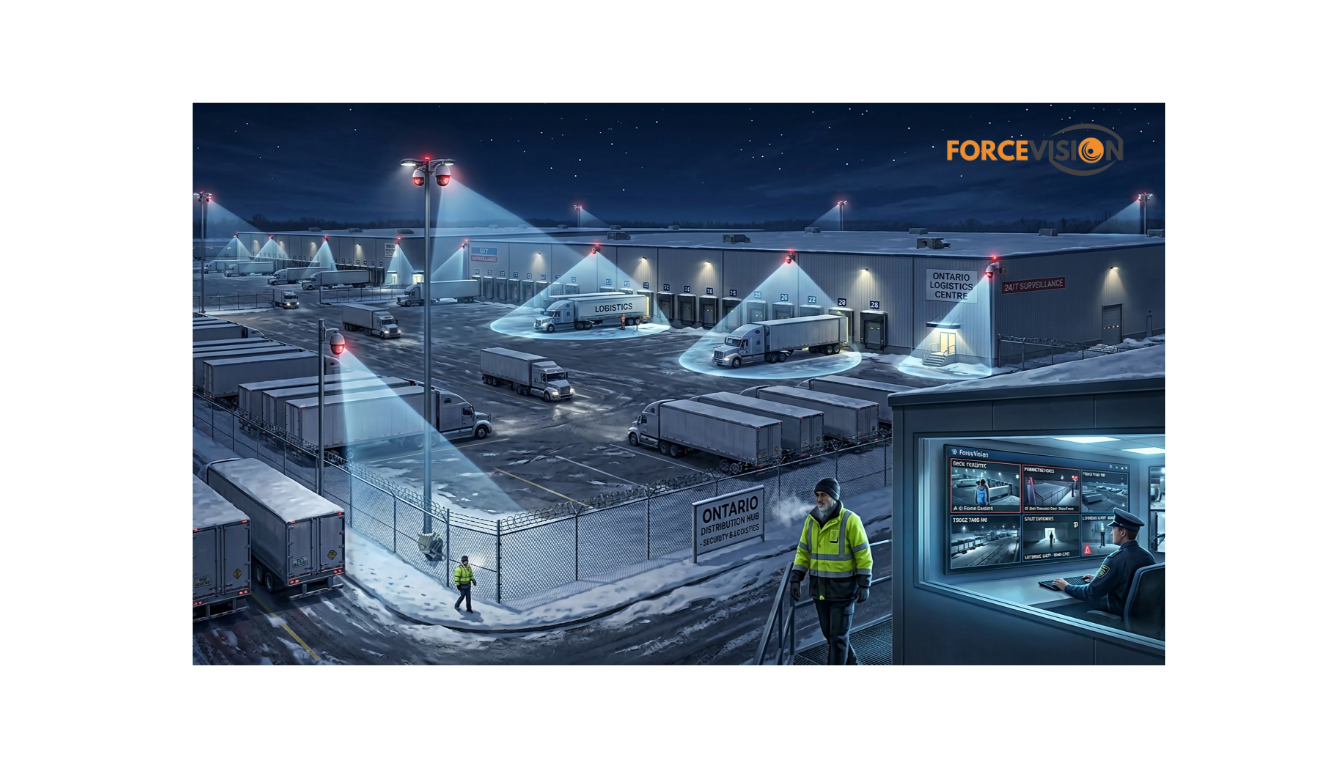
High‑resolution cameras on dock doors, staging lanes, gatehouses, and fuel islands.
-
Importance of lighting design that supports clear video and safety compliance.
SECTION 3 – Video Analytics and Remote Monitoring for DCs
H2: “Can CCTV Replace or Support Night Security Guards?”
-
Remote monitoring centres, intrusion analytics, and detection of unusual movement in inactive zones.
-
Escalation workflows: when to call on‑site staff, police, or managers.
SECTION 4 – Supporting HR and Safety on the Night Shift
H2: “How Does CCTV Protect Night Shift Workers?”
-
Video for investigating injuries, vehicle‑pedestrian interactions, and near misses.
-
Demonstrating safety improvements to insurers and regulators.
SECTION 5 – ForceVision’s Role in Night-Shift DC Security
H2: “How ForceVision Designs CCTV for 24/7 Distribution”
-
Emphasize ForceVision’s experience mapping camera coverage to high‑value assets and night workflows.
-
Subtle CTA inviting Ontario logistics operators to request a night‑shift–focused security assessment.
FAQ
-
Do we need different cameras for night operations?
-
How bright should yard lighting be for CCTV?
-
Can analytics reduce false alarms at night?
-
What retention period is ideal for overnight incidents?


