

Why vandalism and trespassing are more than a nuisance
When most people think of construction site security, they picture stolen tools and equipment. But for many Ontario builders, vandalism and after‑hours trespassing create just as many headaches. Graffiti on newly poured walls, damaged windows, broken fixtures, and people climbing scaffolding for social media videos all have real consequences.
Canadian and international research on construction projects shows that vandalism can lead to unplanned downtime, safety hazards, and additional repair costs that chip away at already tight margins. In some cases, vandalism also opens pathways for theft: once fences are cut or doors are forced for “fun,” others take advantage of the breach to remove materials.
In Ontario’s growing urban and suburban areas — from Toronto and Mississauga to Oshawa and Guelph — sites near schools, nightlife areas, or trails are particularly exposed. Effective CCTV solutions for Ontario construction sites to prevent theft and vandalism must address this broader reality, not just high‑value equipment.
Common types of vandalism and after‑hours incidents
On real projects, vandalism and trespassing show up in several ways:
-
Graffiti tagging on hoarding, walls, and equipment.
-
Broken windows, doors, or light fixtures.
-
Tampering with machinery or playing on equipment.
-
Trespassers climbing scaffolds or entering partially completed buildings.
-
Fire risks from discarded cigarettes or deliberate arson attempts.
Beyond direct repair costs, these incidents raise safety concerns for workers who must inspect and clean up damage before resuming tasks. They can also delay inspections and occupancy, particularly if vandalism affects life‑safety systems.
CCTV cannot eliminate every incident, but it significantly improves deterrence and accountability when combined with other measures.
How CCTV deters vandalism on construction sites
Studies of surveillance and situational crime prevention indicate that visible cameras, when combined with other site controls, reduce offending by making people feel observed and at risk of identification. For construction sites, practical steps include:
-
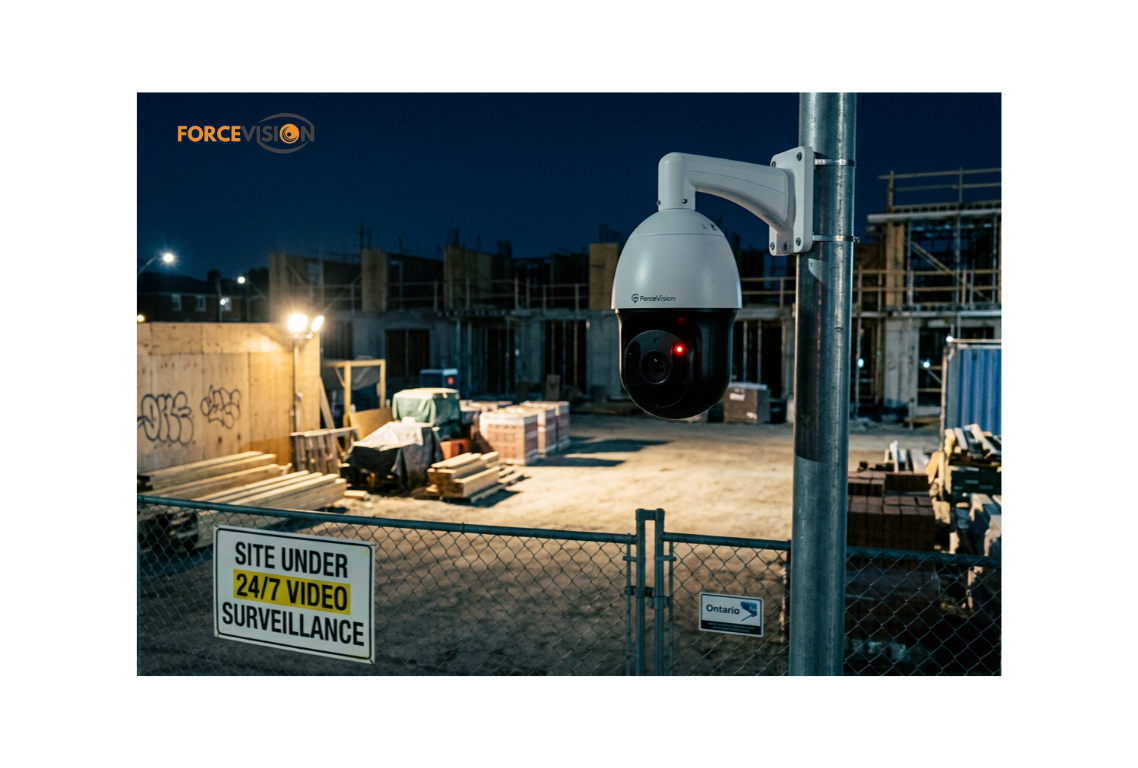
Highly visible cameras and signage along hoarding and main access points.
-
Lighting that highlights camera presence and removes dark corners.
-
Cameras facing popular trespass routes, such as shortcuts, paths, or alleys.
When youth or opportunistic vandals see clear evidence of monitoring, many choose not to take the risk, especially in areas with active local enforcement. For more determined offenders, CCTV ensures a record exists to support future action.
ForceVision helps builders design camera placements that send a strong visual message without making sites feel like fortresses. The aim is targeted, confident coverage, not random devices mounted as an afterthought.
Targeting hot spots: hoarding, scaffolding, and new interiors
To address vandalism and after‑hours damage, CCTV solutions for Ontario construction sites to prevent theft and vandalism should pay attention to three hot spots:
-
Street‑facing hoarding and site entries
-
Cameras angled to capture people approaching and interacting with hoarding.
-
Overlapping views to avoid simple blind spots where taggers can hide.
-
-
Scaffolding and accessible roofs or balconies
-
Cameras on site trailers or temporary poles aimed at scaffold runs.
-
Analytics to detect after‑hours motion or climbing behaviours, generating alerts.
-
-
Completed or nearly completed interiors
-
Cameras inside buildings once windows and doors are installed, watching lobbies, corridors, and key rooms.
-
Coverage of stairwells and elevator areas, which are common access points.
-
By focusing on these zones, site managers can catch the majority of vandalism‑related incidents on video, providing useful evidence to police and, where appropriate, to community partners.
Linking CCTV with community and law enforcement responses
When vandalism occurs, responders often ask: “Do you have video?” High‑quality footage:
-
Helps identify repeat offenders or groups targeting multiple sites.
-
Supports restitution requests or restorative justice approaches.
-
Encourages more proactive patrols when patterns emerge.
Ontario construction news outlets and security providers note that sites with documented security measures, including CCTV, tend to receive better support from law enforcement because evidence is easier to act on.
ForceVision encourages builders to create simple protocols: how to pull clips, how to log incidents, and how to share footage securely with police or city bylaw teams when needed.
Using analytics and remote monitoring for after‑hours control
Analytics and remote monitoring can be especially useful against vandalism and trespassing, which often involve people rather than vehicles or large equipment. Practical uses include:
-
Line‑crossing or zone rules around hoarding and scaffold bases.
-
Loitering detection near site entries or hidden corners.
-
People counting after hours in zones that should be empty.
When these events occur, alerts go to a monitoring centre or designated on‑call managers who can:
-
Issue audio warnings through speakers.
-
Call private security or mobile patrols.
-
Contact local police if a crime is in progress.
ForceVision integrates cameras and analytics with monitoring workflows that fit each client’s resources — from fully managed services to hybrid models where large contractors have in‑house teams.
Turning CCTV into a positive message for neighbours
Construction projects can strain relations with nearby residents and businesses due to noise, traffic, and dust. Interestingly, visible security — including CCTV — can become a reassuring sign that a builder takes community impact seriously.
By publicising that CCTV is in place to prevent vandalism, trespassing, and dangerous after‑hours behaviour, builders show they are protecting not just their own assets but also neighbourhood safety. This can be especially important in infill projects or busy downtown areas.
ForceVision can help builders develop simple messaging and signage that explains the purpose of cameras in clear, community‑friendly language, supporting both security and goodwill.
FAQs: Vandalism and CCTV on Ontario construction sites
1. Can CCTV really reduce graffiti and minor vandalism?
It does not eliminate it entirely, but visible cameras and signage, combined with good lighting and quick response to incidents, significantly reduce repeat offences on many sites.
2. Are interior cameras worth it before occupancy?
Yes, particularly during finishing stages when fixtures, appliances, and architectural details are vulnerable. Short‑term interior cameras can protect high‑value areas until handover.
3. What about privacy concerns from neighbours?
CCTV should be focused on the site itself, not on neighbouring properties. ForceVision designs camera views and masking zones to respect privacy while still providing effective coverage.
4. Is live monitoring necessary to address vandalism?
It is highly beneficial. Real‑time monitoring allows for immediate interventions, like audio warnings or calls to police, which can stop incidents before damage is done.


