

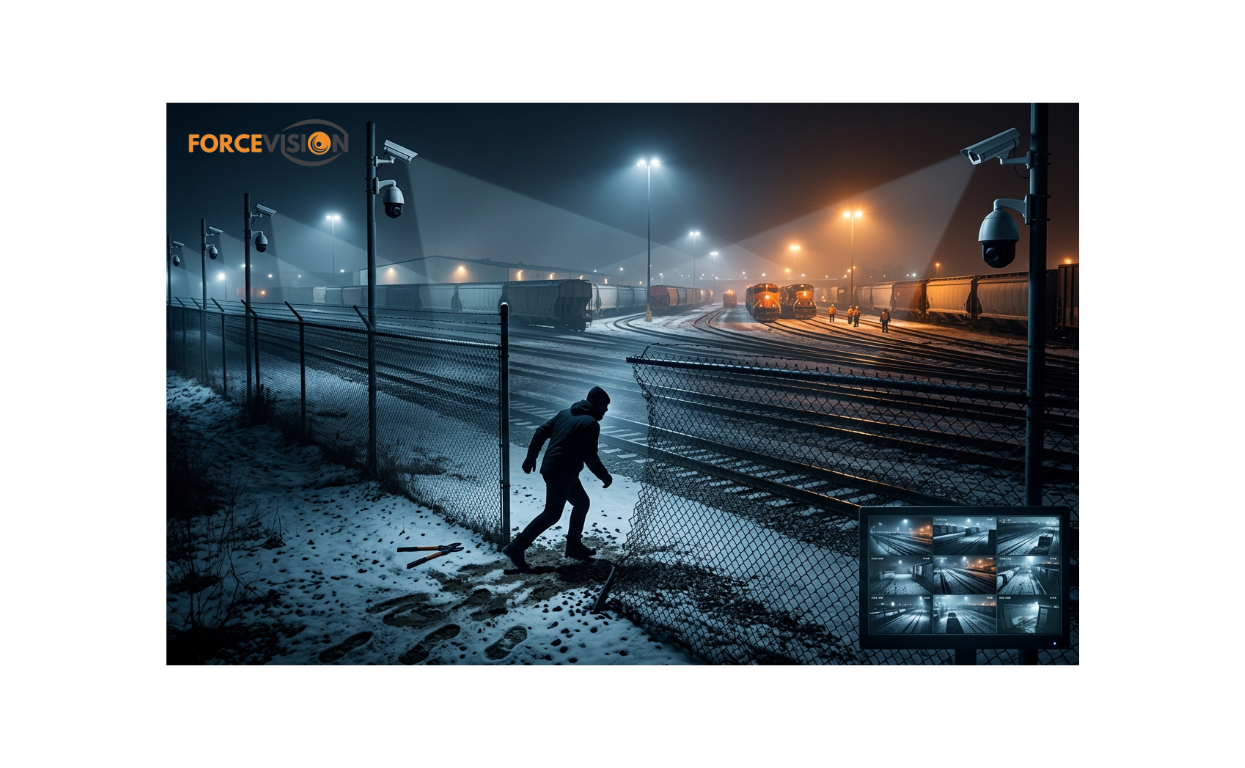
Rail Yard Fence Damage Is a Warning, Not Just a Repair Job
In March 2026, rail enthusiasts shared footage of fresh fence damage at Paris Junction in Ontario, showing a rail corridor barrier torn open near active tracks. While this incident appears minor compared to a derailment or collision, it is a clear red flag: once a fence is breached near a yard or junction, trespassers—and sometimes thieves—gain easier access to high‑risk rail and industrial areas.
CN and other railways in Canada have repeatedly stressed a “zero tolerance” approach to trespassing on rail property, noting that people walking or driving where they do not belong are at high risk of serious injury or death and can also disrupt freight operations. Yet in cities like Hamilton, London, and smaller communities across Southern Ontario, residents and local leaders still struggle with people cutting fences, walking tracks, and using rail corridors as shortcuts, including near rail‑served industrial zones. For plant managers, yardmasters, and logistics leaders, this is not just a railway issue; it is a perimeter‑security and safety problem that starts at the fence line.
Why Fence Breaches Around Rail Yards Are So Dangerous for Industry
Perimeter damage around rail yards and industrial spurs does more than create an eyesore. It opens the door to:
-
Trespass and near misses: people and vehicles wandering into active rail or switching areas where visibility is poor and train braking distances are long.
-
Theft and vandalism: access to parked rail cars, industrial materials, tools, metals, and fuel tanks near tracks.
-
Operational disruptions: security incidents that force railways and industrial operators to halt movements, inspect infrastructure, and interact with police.
The Transportation Safety Board of Canada has issued advisory letters highlighting repeated trespass problems in certain rail corridors and calling for better risk mitigation, including physical barriers, signage, and other deterrents. In practice, that often means fences are patched after each incident—but if nobody clearly sees how, when, and why those breaches occur, the underlying risk remains. That is where a 64‑camera CCTV system becomes an essential part of the perimeter‑security toolkit for rail‑served industrial sites.
Designing 64‑Camera Coverage for Rail Yard Perimeters
A perimeter‑aware 64‑camera layout around a rail yard or rail‑served industrial corridor looks very different from a basic “gate‑only” system. Key elements include:
-
Continuous fence‑line coverage
Bullet or turret cameras mounted along the yard fence, especially near public paths, parks, residential streets, or informal desire lines where people have historically cut through. -
Views of junctions and crossings
Cameras overlooking locations like Paris Junction and other junctions where multiple tracks, roads, and paths intersect, providing context for both fence damage and unsafe approaches. -
Boundary with industrial neighbours
Coverage where your property meets other industrial lots, alleys, or access roads, which can become backdoor routes for trespassers, copper thieves, or catalytic‑converter crews. -
Gates, service roads, and spur accesses
Cameras that record which vehicles and personnel are legitimately entering via authorized points, making it easier to spot activity that originates from a fence cut rather than a gate.
With enough cameras (typically 64 or more for a large yard complex), you can see not just that a fence is damaged, but whether it was hit by a vehicle, cut by hand, or repeatedly pulled back over time—information that shapes the right fix and policing strategy.
Using CCTV and Analytics to Detect Fence Tampering Early
Modern CCTV is not limited to passively capturing damage. With video analytics tuned to rail‑adjacent perimeters, operators can:
-
Detect humans entering a narrow strip along the fence after hours, where no legitimate work should be happening.
-
Flag loitering or unusual movement near known weak points, such as corners, culverts, or bridge abutments.
-
Spot vehicles stopping in unusual places alongside the fence, especially if doors open and people approach the barrier.
Research on rail‑network video analytics shows that AI‑based systems can reliably detect trespass and abnormal behaviour along tracks, helping to trigger interventions sooner. When integrated with a remote monitoring centre or on‑call security, these alerts enable real‑time responses—like dispatching a patrol, using audio warnings, or calling railway police—before a simple fence cut becomes a serious incident.
Trespass Prevention, Liability, and Community Relations
Fence breaches near rail‑served industrial corridors rarely happen in isolation. They are part of a broader pattern of how people move through a community and interact with infrastructure. In some Ontario cities, debates have emerged about whether strict “zero tolerance” enforcement is the right approach when people feel they have no safe or convenient alternatives to cross tracks or reach bus stops and workplaces.
For industrial operators, this creates a delicate balance:
-
Safety and legal obligations demand that you discourage and address trespass on or near your property and connected rail infrastructure.
-
Community relations benefit when you understand why people are cutting fences or walking along tracks and can share objective data with municipalities and railways about recurring patterns.
CCTV footage—properly anonymised and contextualised—can help build that understanding. By showing where people are regularly breaching fences and at what times, you can support discussions about improved paths, crossings, signage, or enforcement that make sense for both safety and local realities.
Integrating Perimeter CCTV with Rail Safety Measures
Railway and government stakeholders are already implementing various measures to reduce trespass and self‑harm incidents along tracks, including fencing, anti‑trespass mats, signage, and targeted education campaigns. For industrial operators whose yards sit within these corridors, perimeter CCTV adds a crucial complementary layer:
-
Verification: confirming that new barriers, mats, or signage are present, intact, and being used as intended.
-
Effectiveness monitoring: comparing trespass patterns before and after interventions using video evidence.
-
Incident support: providing clear, time‑stamped footage when railway police, TSB, or Transport Canada investigate a significant event in or near your yard.
When your 64‑camera system is designed with this broader ecosystem in mind, it becomes a shared safety asset rather than just a private security tool.
How ForceVision Helps Rail-Served Yards Harden Their Perimeters
ForceVision focuses on 64‑camera‑and‑larger CCTV systems for rail‑served industrial clients across Southern Ontario—yards, intermodal terminals, manufacturing plants, and warehouses built along mainlines and branch lines. On projects involving perimeter and fence‑line risk, ForceVision works with site and rail stakeholders to:
-
Map all fence segments, crossings, junctions, and likely trespass paths around the yard.
-
Design camera placement that balances comprehensive fence visibility with key detail views at known hotspots.
-
Configure analytics and monitoring workflows so fence tampering and trespass attempts trigger actionable alerts instead of being discovered days later.
If fresh fence damage at a junction like Paris or repeated cut sections along your yard are becoming a recurring headache—or a source of worry—ForceVision can walk your operations and security leaders through a perimeter‑focused 64‑camera design, with a free assessment focused on your specific rail and industrial context.
FAQs: Industrial CCTV for Rail Yard Perimeter Security in Ontario
Is perimeter CCTV really necessary if the railway already has its own measures?
Yes. Railways focus on corridor‑wide safety, but the interface between public areas, your private yard, and spur accesses often falls on the industrial operator. Site‑owned CCTV fills that gap and provides evidence tailored to your risks.
How many cameras are needed to cover a long yard fence?
For large rail‑served yards and plants, reaching 64 cameras is common once you properly cover long fence lines, junctions, gates, internal tracks, and key building corners without leaving blind spots.
Can analytics reduce false alarms from wildlife or passing trains?
Yes. Modern video analytics can be tuned to focus on human‑sized movement within a narrow band along the fence and to ignore trains on the main line or small animals outside defined zones.
How long should perimeter footage be retained?
Because fence breaches and trespass patterns often emerge over weeks, many operators keep 30–90 days of footage from key perimeter cameras, subject to storage, policy, and any privacy requirements.


