

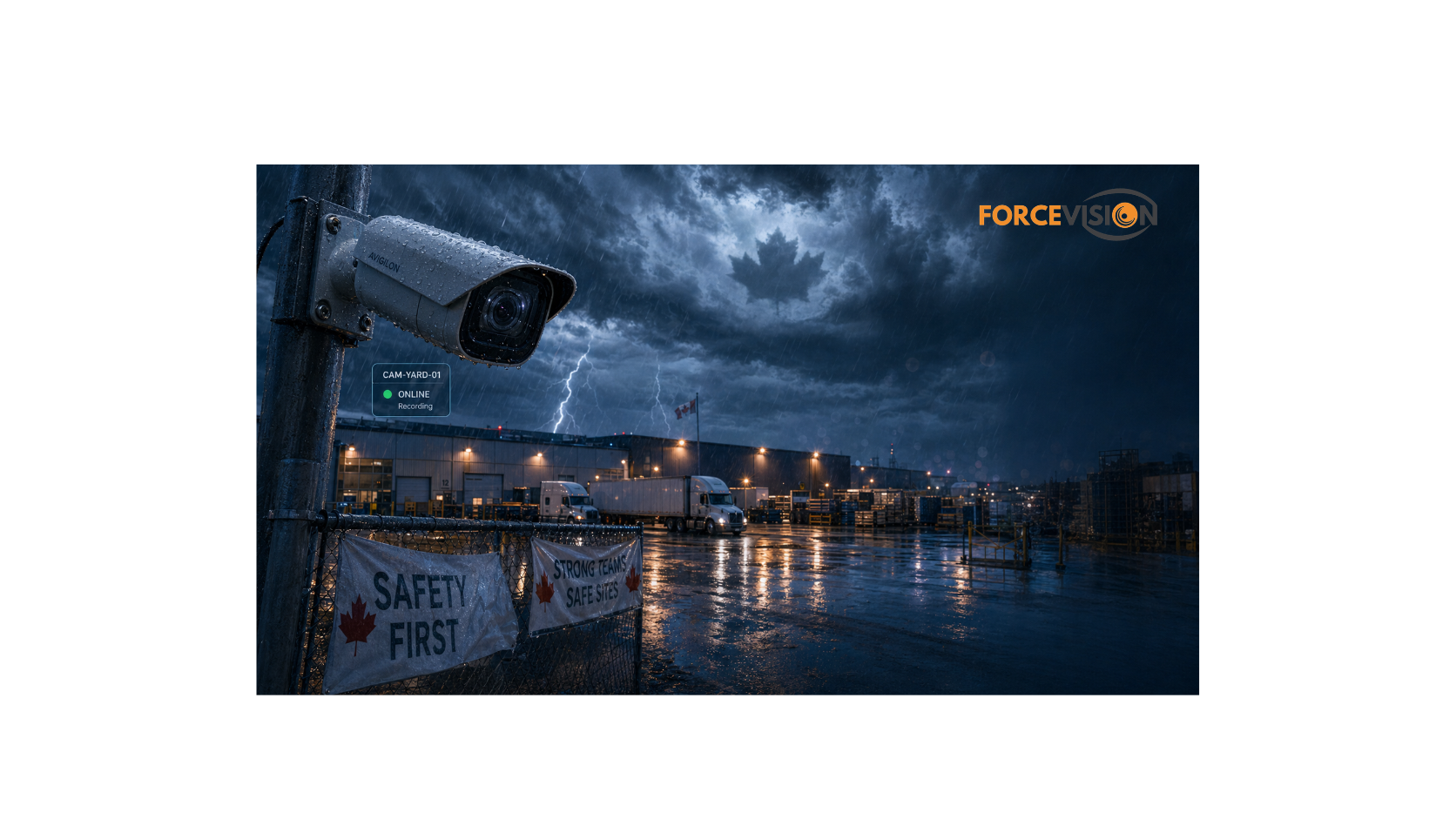
From sudden windstorms rolling off Lake Ontario to heavy snow and ice events, severe weather is an increasingly important part of risk planning for industrial operators. Power interruptions, flying debris and flooding can disrupt rail yards, construction sites, warehouses and energy facilities in minutes. Industrial CCTV for severe weather risk in Ontario offers a way to both manage incidents in real time and document conditions for insurers, regulators and internal reviews.
When an overnight storm damages a yard full of trailers or topples scaffolding on a construction project, the first questions are always: What exactly happened, when, and was anyone hurt? Cameras cannot control the weather, but they can provide an unbroken record of conditions leading up to and during the event, helping distinguish between unavoidable damage and preventable vulnerability.
How can CCTV support storm preparation?
Industrial CCTV for severe weather risk in Ontario starts before the first cloud appears. Fixed and PTZ cameras can help teams remotely inspect roofs, yard storage and construction staging areas as storms approach, reducing the need for personnel to walk sites in hazardous conditions.
Practical uses include:
-
Checking that loose materials, pallets and temporary structures are secured ahead of high‑wind events.
-
Verifying that flood‑sensitive assets have been moved to higher ground where possible.
-
Confirming that vehicles and rolling stock are parked in lower‑risk configurations, away from trees, power lines or unstable structures.
By tying camera checks into standard storm‑prep checklists, operators can audit and improve their own readiness, which is valuable when discussing risk management with insurers.
What role does CCTV play during severe weather?
When severe weather hits, safety of people always comes first. Industrial CCTV for severe weather risk in Ontario allows control rooms to monitor exposed yards, access roads, rail lines and high‑risk structures without sending staff into harm’s way.
Operators can:
-
Watch for unsafe attempts to move equipment or vehicles during high winds or lightning.
-
Monitor water levels in known flood‑prone areas, supporting timely decisions about shutdowns or evacuations.
-
Track real‑time damage from hail or wind‑blown debris that could impact pipelines, tanks or critical equipment.
In multi‑site operations, cameras give central teams a way to triage which yards or plants need immediate assistance once travel becomes possible again.
How does CCTV help with post‑storm investigations and claims?
After a major storm, documentation becomes critical. Insurers want to know not only what was damaged, but how it was stored, secured and maintained before the event. Industrial CCTV for severe weather risk in Ontario provides time‑stamped footage that shows conditions leading up to the loss, the storm’s intensity at the site and the immediate response.
Benefits include:
-
More accurate damage assessments by matching footage to on‑the‑ground inspections.
-
Clear evidence of reasonable precautions taken, supporting claims where exclusions for neglect might otherwise be raised.
-
Insights into which temporary measures worked and which failed, informing future mitigation efforts.
For rail yards and logistics hubs, footage can also clarify responsibility where multiple parties share space—such as which trailers belonged to which carriers and whether loading practices contributed to damage.
How should Ontario operators adapt their CCTV design for weather?
Industrial CCTV for severe weather risk in Ontario must be physically resilient. Cameras, mounts and housings should be rated for wind loads, temperature swings and potential impact from debris, and network infrastructure should be designed with power backup and surge protection.
Design considerations include:
-
Choosing camera positions that balance coverage with protection, avoiding unnecessary exposure while still capturing critical views.
-
Ensuring NVRs and network switches are located in safe, dry, temperature‑controlled areas with battery or generator backup.
-
Configuring higher frame rates and retention for storm‑season months if storage allows, so detailed records exist when they are most needed.
Analytics can also help by highlighting areas where water pooling or snow buildup consistently appears, pointing to drainage or maintenance issues.
How can ForceVision support weather‑ready CCTV strategies?
ForceVision works with industrial sites across Southern Ontario to design camera systems that account for both everyday operations and seasonal extremes. When planning or upgrading industrial CCTV for severe weather risk in Ontario, the team can advise on hardware choices, mounting strategies, power and network resilience, and recording policies that support both safety and insurance objectives.
If your site has experienced recent near‑misses or damage from storms, a focused CCTV review—aligned with your risk and insurance teams—can identify where additional coverage or hardened infrastructure would make the biggest difference. ForceVision can facilitate that process with a no‑pressure assessment and clear recommendations.
FAQs
Q1: Do we need weather‑resistant cameras everywhere?
Not everywhere, but cameras in exposed outdoor positions should be rated for local conditions, including temperature ranges, precipitation and potential impact.
Q2: How long should we keep footage from major storms?
Many operators retain storm‑related footage longer than standard retention, especially when claims or regulatory reviews are expected; policies should be set in consultation with legal and insurance advisors.
Q3: Can CCTV continue operating during power outages?
With appropriate UPS systems and, ideally, generator backup, critical cameras and NVRs can continue recording through many outages, though runtime depends on system design.
Q4: Does storm‑focused CCTV help justify insurance investments?
Yes, documented storm‑prep practices and detailed loss footage demonstrate proactive risk management and may support more favourable coverage or claims outcomes.


