

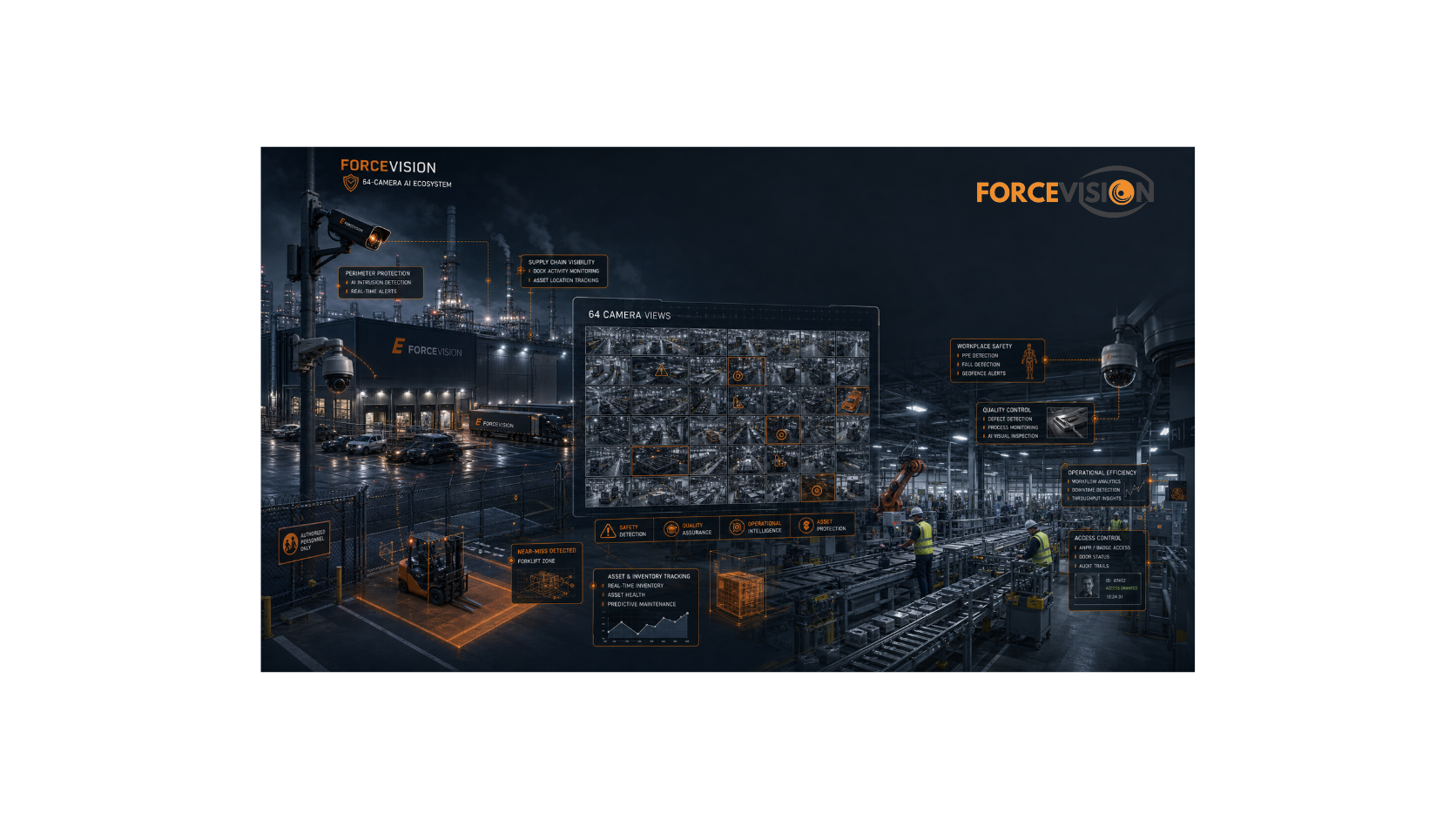
When most manufacturing operators think about installing a 64-camera surveillance system, the conversation typically starts—and sometimes ends—with theft prevention, perimeter security, and after-hours break-ins. Those are legitimate concerns, especially for large plants handling high-value raw materials, finished goods, or sensitive intellectual property. But the most forward-thinking plant managers and operations directors across Southern Ontario’s manufacturing corridor—from automotive suppliers in Oakville and Burlington to food processors in Hamilton, aerospace fabricators in Mississauga, and advanced materials plants in Kitchener-Waterloo—are discovering that a comprehensive IP camera platform delivers value far beyond traditional security. When designed with operational intelligence in mind, a 64-camera system becomes a tool for safety audits, process bottleneck analysis, equipment utilization tracking, quality control verification, and workforce retention—functions that can generate a ten-times return on investment within the first 24 months.
How Video Intelligence Supports Safety Audits, Incident Investigations, and Regulatory Compliance
Manufacturing environments present constant safety hazards: moving machinery, overhead cranes, forklift traffic, chemical handling, hot work zones, and confined spaces. When an injury or near-miss occurs, the difference between a quick resolution and a prolonged Ministry of Labour investigation often comes down to how quickly you can reconstruct what happened. A 64-camera system with coverage of production floors, loading docks, material handling zones, and high-risk work cells provides time-stamped, high-resolution footage that documents PPE compliance, lockout-tagout procedures, forklift operator behavior, and supervisor interventions. That footage supports root-cause analysis, helps refine standard operating procedures, and demonstrates to regulators and insurers that you’re committed to continuous safety improvement. Just as importantly, it allows safety teams to conduct proactive audits—reviewing footage from the previous week to spot unsafe behaviors, crowded walkways, or blocked emergency exits—and address hazards before they result in injuries.
Using Camera Analytics to Identify Process Bottlenecks and Optimize Production Flow
A modern IP camera platform equipped with analytics software can do far more than record events—it can measure them. By deploying cameras at key production checkpoints—raw material intake, machining centers, assembly stations, quality inspection zones, and finished goods staging—you create a visual record of throughput, dwell times, and queue lengths. Analytics engines can count parts moving through a work cell, measure how long pallets sit at a station before the next operation begins, and flag anomalies such as unexpected downtime or repeated stoppages. When integrated with your manufacturing execution system (MES) or enterprise resource planning (ERP) platform, these insights help operations teams identify bottlenecks, rebalance workloads, and validate that process improvements actually deliver the throughput gains promised during lean or Six Sigma initiatives. Instead of relying solely on shift reports or anecdotal feedback, you have objective, time-stamped data that reveals where time and capacity are being lost.
Enhancing Quality Control and Reducing Customer Complaints Through Visual Documentation
Quality escapes—defects that slip past inspection and reach the customer—can trigger costly recalls, warranty claims, and damage to long-term client relationships. For manufacturers producing components or assemblies under tight specifications, especially in sectors such as automotive, aerospace, or medical devices, visual documentation of every quality checkpoint adds a critical layer of traceability. Cameras positioned at inspection stations, packaging lines, and final audit zones capture images or short video clips of each unit as it passes, creating a searchable archive that can be cross-referenced with batch numbers, shift timestamps, and inspector IDs. When a customer reports a defect weeks or months after shipment, you can pull footage to verify whether the issue originated in your process, identify which inspector signed off, and determine whether similar defects affected other units in the same run. That rapid response reduces dispute resolution time, supports insurance claims, and demonstrates accountability to quality-focused clients who audit their supply chains.
How Visible Surveillance Supports Workforce Retention by Promoting Fairness and Reducing Workplace Conflict
Manufacturing plants with visible, well-communicated camera systems often see unexpected benefits in employee relations and retention. When workers know that interactions with supervisors, disputes over break times, or allegations of favoritism can be reviewed objectively, it levels the playing field and reduces the perception that decisions are arbitrary or biased. HR teams report that video footage frequently resolves “he said, she said” conflicts quickly and fairly, allowing managers to take corrective action based on facts rather than competing narratives. In an era when skilled trades and machine operators are in high demand and turnover is expensive, creating a workplace culture where fairness and accountability are visible—literally—can be a differentiator in attracting and retaining talent. Employees also appreciate that cameras document their safe work practices and productivity contributions, which can support performance reviews, bonus calculations, and promotion decisions.
Integrating Video with ERP, MES, and Alarm Systems for a Unified Operational Dashboard
The true power of a 64-camera system emerges when it’s integrated with the other digital systems that run your plant. By linking your NVR to your ERP or MES, you can correlate production data with visual evidence: did that unexpected downtime event match what the operator logged, or was there a gap ? Alarm system integration ensures that every fire panel alert, intrusion detection, or equipment fault automatically cues the nearest camera to the event, creating a complete incident record without requiring manual operator action. Access control integration logs every door entry with corresponding video, so you know exactly who accessed a restricted area, when, and what they did while inside. When all these data streams feed into a unified dashboard accessible to operations, safety, maintenance, and security teams, decision-makers can spot patterns, respond faster, and make investments based on evidence rather than intuition.
If you’re wondering what the right mix of camera types, analytics features, and system integration might look like for your manufacturing plant—one that supports both security and operational goals—ForceVision can walk you through a site assessment that maps coverage to your specific workflows, risk areas, and improvement priorities.
Practical Next Steps for Manufacturing Operators
Start by identifying the highest-value use cases for video beyond theft: safety incident hot spots, quality control checkpoints, production bottlenecks, or workforce conflict zones. Engage your safety, quality, and operations teams early to understand what they need to see and how they would use footage to drive improvement. Evaluate your current camera coverage and determine whether it’s designed to support operational intelligence or just basic security—many legacy systems lack the resolution, retention, or analytics needed for process review. Pilot a small-scale integration project, such as linking one production cell’s cameras to your MES to measure cycle times, and use the results to build internal buy-in for a plant-wide upgrade. Finally, communicate transparently with your workforce about how cameras will be used, ensuring employees understand that the goal is fairness, safety, and continuous improvement—not punitive surveillance.
FAQ SECTION
Q: How can video analytics help identify production bottlenecks?
A: Cameras with analytics can count parts, measure dwell times at work stations, and flag queue buildups, providing objective data that reveals where throughput is being lost and validating the impact of process improvements.
Q: What role does video play in workplace safety compliance and Ministry of Labour investigations?
A: Time-stamped footage documents PPE compliance, lockout-tagout procedures, and operator behavior, supporting root-cause analysis and demonstrating continuous safety improvement to regulators and insurers.
Q: Can surveillance systems improve employee retention in manufacturing plants?
A: Yes. Visible, well-communicated camera systems promote fairness by providing objective evidence in workplace disputes, reducing perceptions of favoritism and creating a culture of accountability that skilled workers value.
Q: How much video retention is needed for quality control and customer dispute resolution?
A: Manufacturers handling long-lead products or components with extended warranty periods often maintain 60 to 180 days of footage to support traceability and defect investigations months after shipment.


